Latest Posts

Kosovo’s locomotives, in photographs (Part 2 – other ex-JŽ locos)

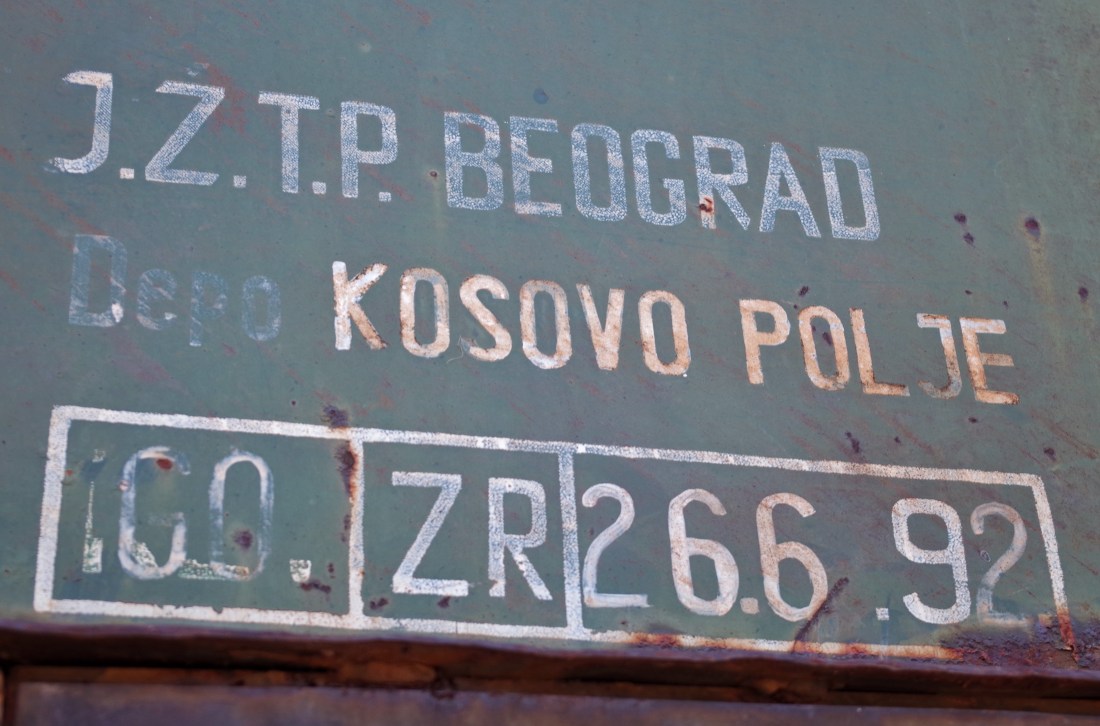
In Part 1 we looked at the 11 General Motors-designed diesel locos of the former JŽ that are now in Kosovo, but they do not comprise even half of the machines from the former Yugoslavia that can still be found in the disputed Balkan state.  Here is an illustrated look at the other 13 locos – all taken 19/09/15.

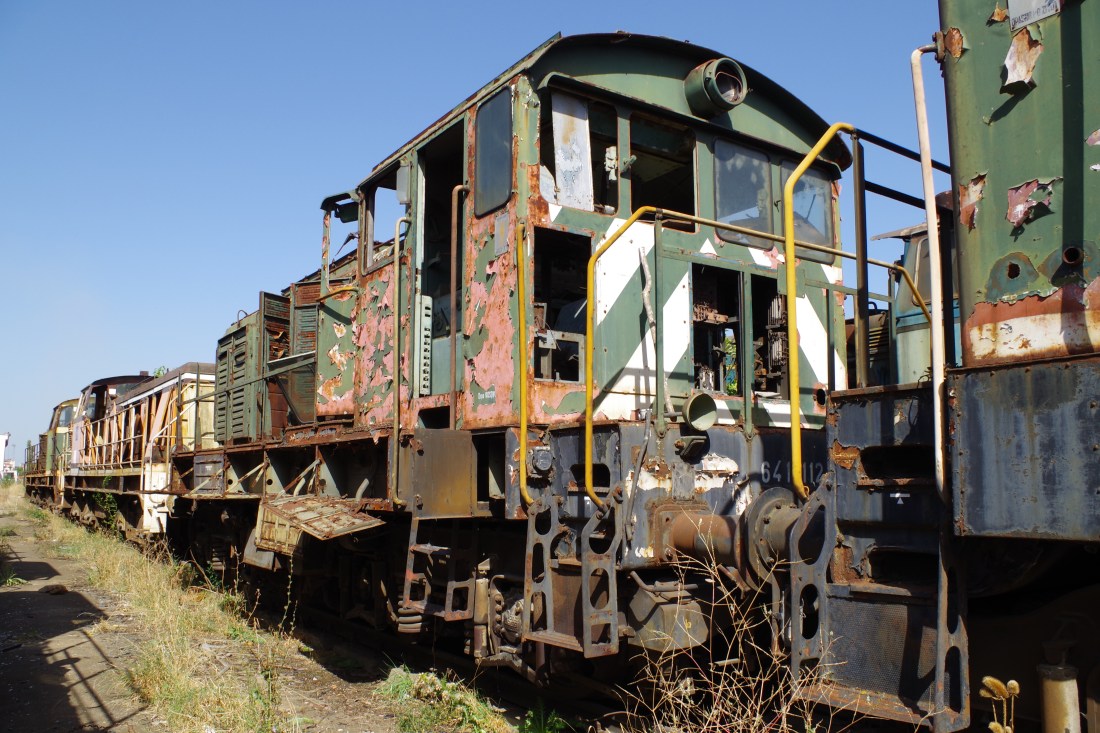
Ex-JŽ Class 641

641 111

IMGP2496

641 112

IMGP2518.JPG

641 122

IMGP2522.JPG

641 129

IMGP2520.JPG

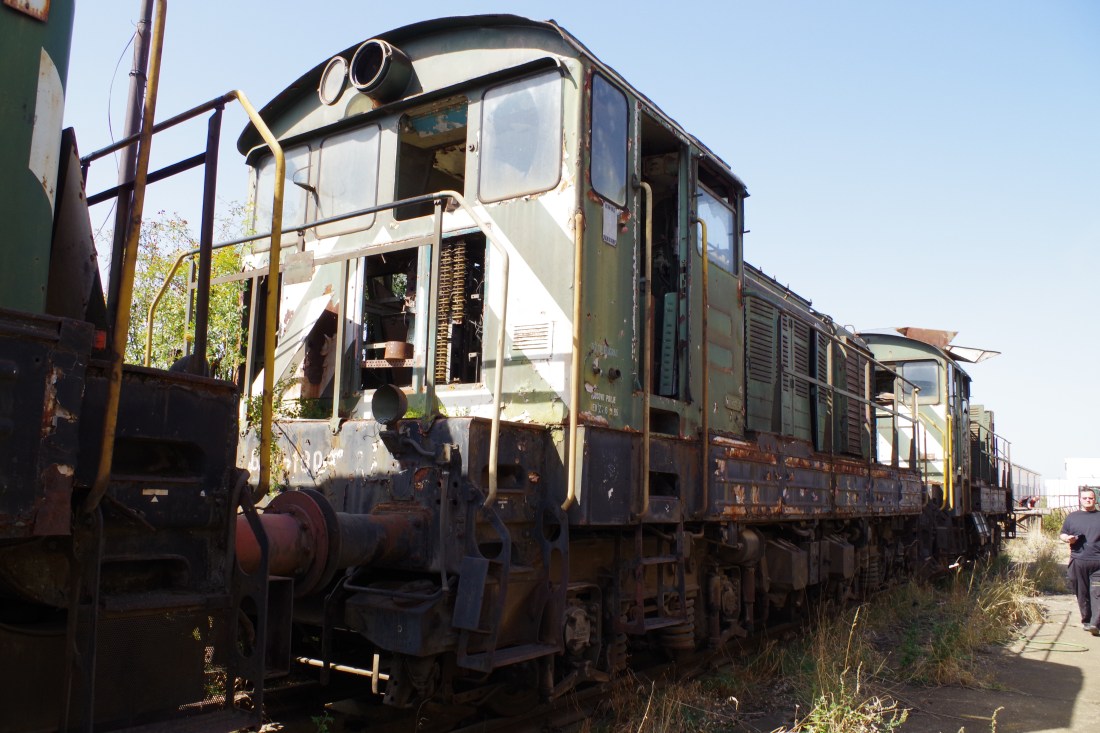
641 130

IMGP2512.JPG

641 131

IMGP2511.JPG

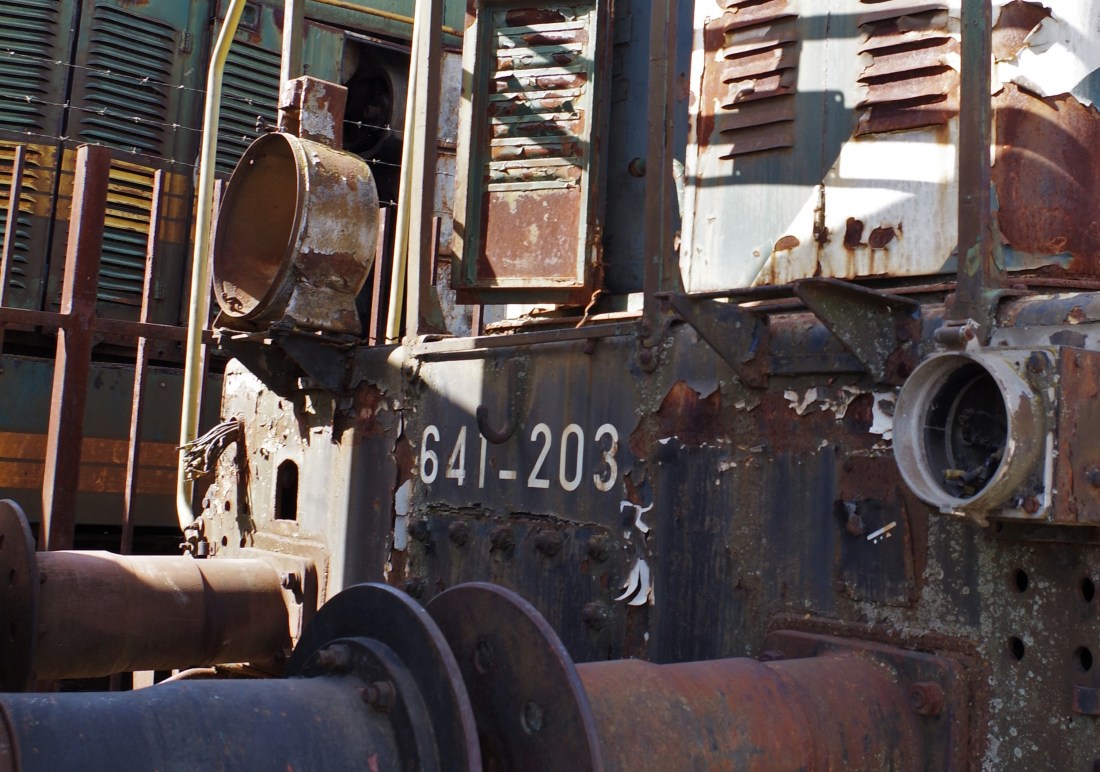
641 203

IMGP2492.JPG

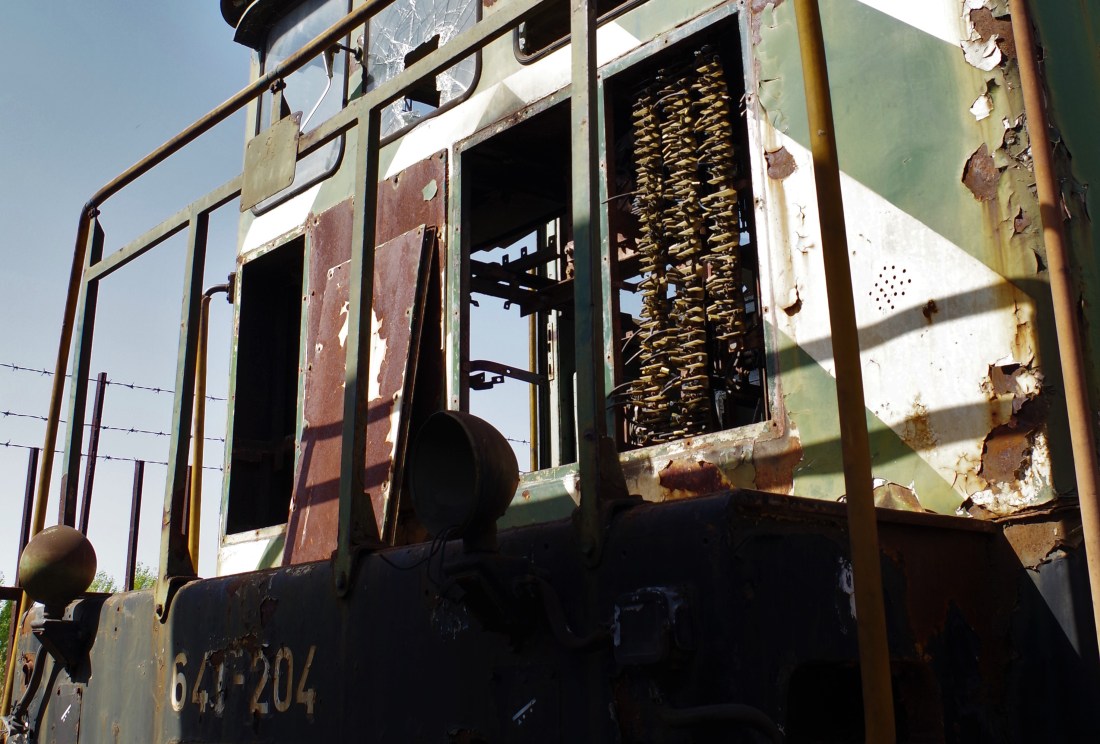
641 204

IMGP2516.JPG

641 211

IMGP2526.JPG

641 212

IMGP2517.JPG

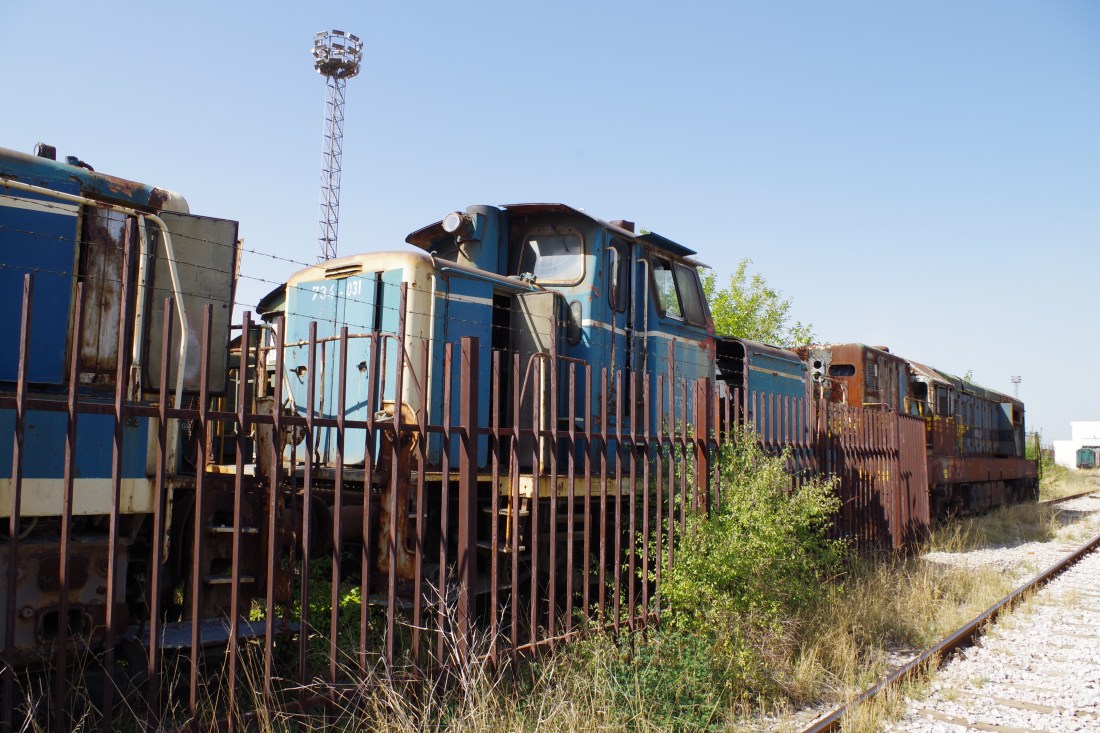
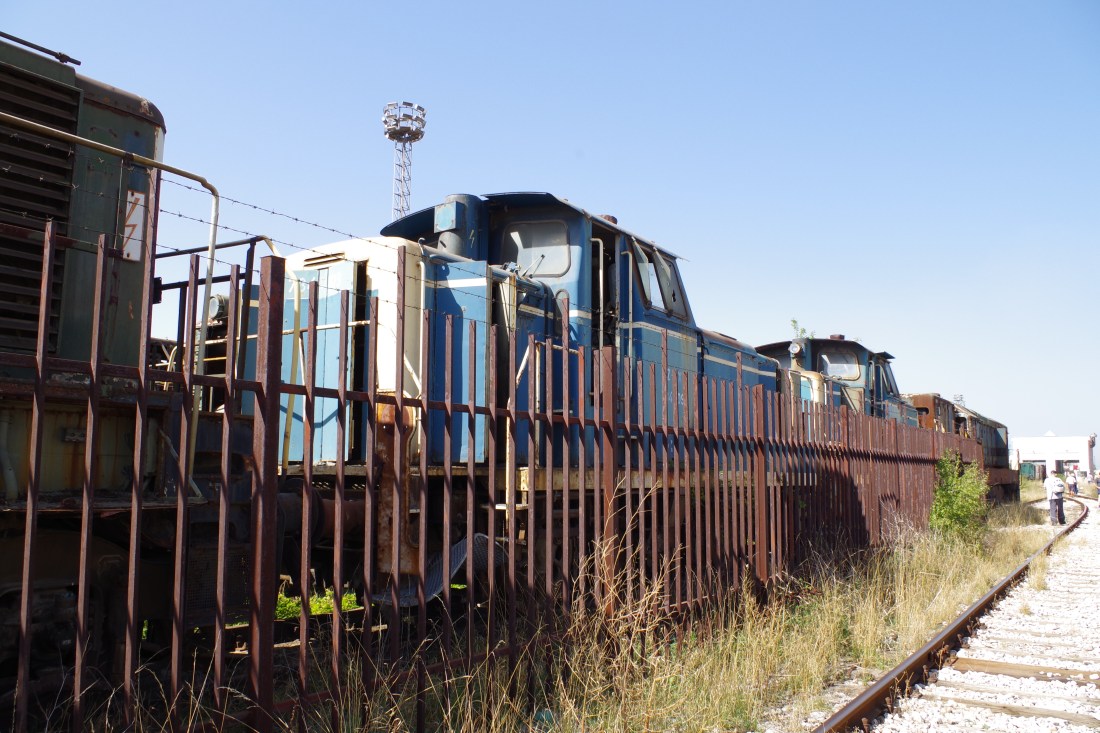
Ex-JŽ Class 734 (previously DB Class 260/261)

734 031 (ex-260 418)

IMGP2500.JPG

734 109 (ex-261 690)

IMGP2497.JPG

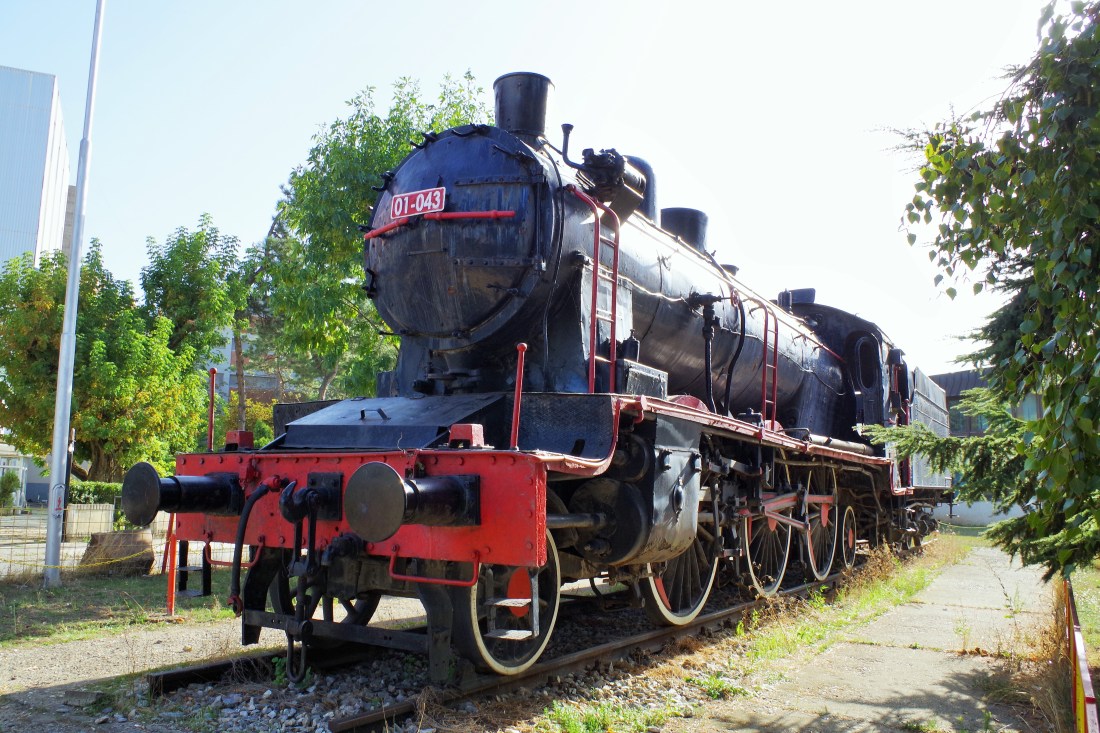
Ex-JŽ Class 01

01.043 (plinthed at Fushë Kosovë)

IMGP2619.JPG


If you’re enjoying the content of this website, please could I invite you to have a look at how you could support it?  Thanks!

Saturday 26th August 2017: German V75 railtour

Saturday 26th August 2017 sees an unusual railtour operated from the former East Germany into the Czech Republic and return, featuring the sole surviving ex-Deutsche Reichsbahn class 107 diesel loco and a Czech sister machine.

With an urgent need to replace its fleet of 21 inherited class 80 steam locos, and without a proven home-grown diesel design, 1962 saw the East German Deutsche Reichsbahn procure a fleet of 20 type “V75” diesel-electric locos from the Czechoslovakian manufacturer CKD (Ceskomoravska Kolben Danèk).  These were identical to the type T435.0 “Hektor” design which had been successfully supplied by CKD to the Czechoslovakian state railway, ČSD.

These 750hp, six-cylinder Bo-Bos operated primarily in the Leipzig and Halle area, almost exclusively on local freight work.  Under the renumbering scheme of 1970, V75 001 to V75 020 became 107 001 to 107 020.

The 107s were largely ousted by class 106 in the late 1970s and early 1980s, and the majority were then scrapped.  However, two – 107 004 and 107 018 – passed into industrial use at the Karsdorf cement works, giving them a stay of execution that took them through German reunification, and they then passed to the KEG (Karsdorfer Eisenbahngesellschaft) in 1991, who used them on works trains on the main line.

107 004 was cut up in 2011, but 107 018 now belongs to Railsystems RP GmbH and spends most of its time on engineers trains across Germany.

The above is a link to a video uploaded to YouTube by the user LudmillaPOWER featuring scenes of a railtour hauled by 107 018 in 2015.

The railtour

Roughly once a year – usually in late summer – as befits its lack of train heating capability – 107 018 ventures out on railtour duty with the Eisenbahnmuseum Schwarzenberg.

In 2017, this tour is advertised for Saturday 26th August 2017, and sees 107 018 paired with one of its Czech cousins – T435.0145 (ČD 720 145).  Fittingly, this tour runs from East Germany into the Czech Republic.  Initially, the destination was advertised as the beautiful spa town of Mariánské Lázně, but engineering works have necessitated a switch to Chyše.

Times and fares

Tickets are €84 (€50 for children) and are available from the Eisenbahnmuseum Schwarzenberg website.

The tour departs from Schwarzenberg at 07:25 (arrive back 21:20), calling at Antonsthal at 07:40 (21:00) and Johanngeorgenstadt at 08:00 (20:25), running over steeply-graded routes via Karlovy Vary to Chyše, where it arrives at 12:30 and departs at 16:15.

Getting to the tour

Schwarzenberg is a fairly large town, however its location in the Ore Mountains (Erzgebirge) is perhaps not the best to base yourself.  However, it is possible to access this tour from Zwickau, the fourth-biggest city in Saxony (via RB23857, the 06:09 ex-Zwickau which is a +30 onto the tour); equally there is a +40 off the tour onto RB23888, the 22:00 to Zwickau.

Zwickau is no longer on the Intercity network – in fact, it has no booked loco hauled services at all any more – but is easily accessible from Leipzig, Chemnitz and Dresden, as well as across the erstwhile Iron Curtain into Bavaria.

One thing which may be of interest is that by doing this tour in just one direction, it can be combined with the “Rakovnický rychlík” which is also booked to run that day.  You can travel on the outward leg of the tour, followed by Os16711, the 13:08 DMU from Chyše to Rakovnik, which gives a +73 onto the “Rakovnický rychlík” to Praha at 15:32.  Alternatively, the outward “Rakovnický rychlík” can be travelled on from Praha to Rakovnik (arriving 10:30), for a choice of DMUs to Chyše, for the return leg of the railtour.

The destination

Having a population of only 585, Chyše – Chiesch in German – may at first glance be an odd choice of railtour destination.  This town, situated on the river Střela 5 miles north-east of Žlutice, is probably most well known as the location of a Baroque castle, entry to which is included in the price of the tour ticket.  The castle is home to a brewery, which tour participants are also encouraged to visit during the 3¾-hour layover.

Chyše also has a ruined synagogue, a tragic reminder of the events of 1938-1945, when this area was part of the “Sudetenland” ceded to Germany.  Indeed, the 1930 census saw the town with over the twice the number of citizens than it has today.  There is certainly plenty of history in the country through which this tour passes.


If you’re enjoying the content of this website, please could I invite you to have a look at how you could support it?  Thanks!

Daily until 30th September 2017: English Electric power in Portugal

A welcome development in Portugal this summer is the re-emergence of a predictable passenger diagram for the English Electric class 1400 diesel locos.

To be entirely fair, they have been frequent performers on both the Minho and Douro routes out of Porto, but only vice-DMU, and unfortunately some enthusiasts have travelled to the region in the hope of riding behind one, only to have several fruitless days at a time.  There is also, of course, the Presidential Train, but with fares from €500 per person, that is not exactly basher-friendly!

As part of CP’s small catalogue of “heritage” tourist-oriented operations for summer 2017, however, a daily round trip on the Douro route has been advertised for haulage by the class – roughly 90 miles each way through some of Portugal’s best scenery – under the “MiraDouro” name.  This is booked until 30th September.  1424 is specified as the nominated loco on CP’s publicity, but 1413 and 1415 have also worked on the turn so far.

Times and Fares

The diagram is as follows:-

20815 09:25 Porto São Bento – Tua
20816 16:34 Tua – Porto São Bento

The full PDF timetable document for the Douro line for the summer – including the two trains booked for the 1400 – can be found here.

Reservations on the trains are stated to be compulsory, however fares are the same as for the service trains on the route, i.e. €11.60 each way.

Route and Traction

The Douro route is so named as it follows the valley of the Douro river, and therefore water is a common theme, along with bridges and tunnels!  It is commonly considered to be one of Europe’s most scenic journeys, and with good justification.

The 1400s are 1,330hp English Electric machines with 8CSVT power units.  The first ten (1401-1410) were actually built at EE’s Vulcan Foundry in Newton-le-Willows, whereas 1411-1467 were constructed under licence by SOREFAME at Amadora in Portugal.  These are often considered as “Portuguese Class 20s”, however this is perhaps something of a simplification, their more powerful intercooled power units really pitching them as half a BR Class 50, or indeed half a CP class 1800, with which they share common parts.

Shunters aside, they are the only operational English Electric diesel locomotive type on the European continent.

What can I combine it with?

The Portuguese loco-hauled scene is a mere shadow of its former self, but there are a couple of other things worth doing whilst in the area.

On Saturdays and Sundays throughout the tenure of this diagram – as well as on Wednesdays in August and also on Tuesday 15th August – the Douro also sees a steam working – 15:22 Regua to Tua and 18:32 back.  The outward leg of this arrives at Tua at 16:33, i.e. one minute before the “MiraDouro” departs (although if that +1 made, you would have a nice fill-in move!).  This is another of CP’s historical workings, and is booked for haulage by 0186, a 2-8-4T built by Henschel in 1925.  More details here.

The other heritage operation in this neck of the woods that may be of interest to haulage enthusiasts is the metre-gauge operation on the Vouga line, using Alsthom no.9004, again until 30th September.  This runs on Saturdays only and consists of a return trip from Aveiro to Macinhata at 13:40.  Aveiro is situated on the Porto to Lisboa main line and Intercity services on this route are hauled by class 5600 electrics.

Bashing by stealth… taking the family

This is an entirely “family friendly” day out, with sociable timings (09:25 off Porto, arriving back between 20:30 and 21:15 depending on date) and, of course, fantastic scenery en route, with some decent time at the destination.

Porto – Portugal’s second-largest city – itself also should not need much selling.  The city centre has held UNESCO World Heritage status for over 20 years and has visible heritage stretching back to Roman times.  The city is, however, very hilly (being built on valley sides surrounding the Douro), and a defining feature of it is the double-deck iron Dom Luís I Bridge spanning the river.  São Bento station itself is something of an accidental tourist attraction, with 20,000 decorative azulejo tiles adorning its walls, depicting events from Portuguese history, dating from 1905-1916 by Jorge Colaço.

To complement its metro system, Porto also has a heritage tram operation – more details here.

Getting there

Porto has an airport and receives flights from Birmingham, Gatwick, Liverpool, Luton and Manchester.

Kosovo’s locomotives, in photographs (Part 1 – ex-JŽ GM diesels)

IMGP2475

This is a photographic record of the General Motors diesel locomotives of the former JŽ (Jugoslovenske Železnice; Yugoslavian Railways) locomotives in Kosovo, all taken 17-20/09/15.

Ex-JŽ Class 645

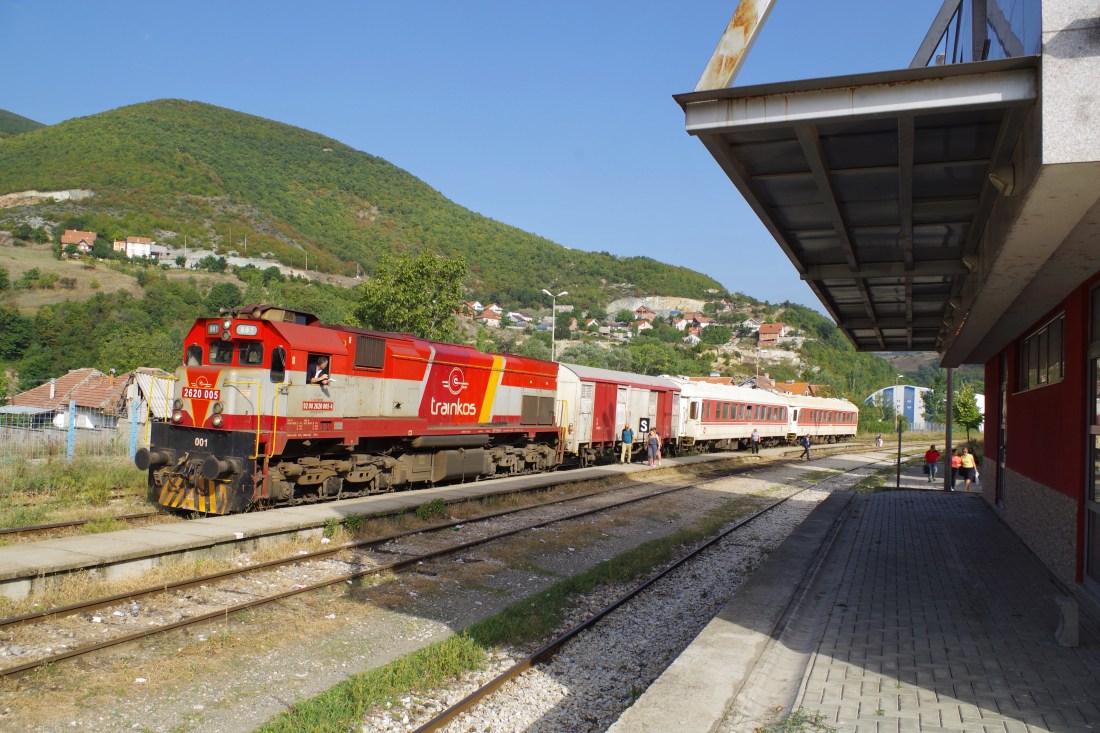
2620 005 (ex-645 033/HŽ 2044 031)

IMGP2662

2620 016 (ex-645 018/HŽ 2044 010)

There is no photograph of 2620 016 as this locomotive had yet to be delivered at the time of my visit – although I’m sure I have a picture of it in Croatia that I hope to find soon!

Ex-JŽ Class 661

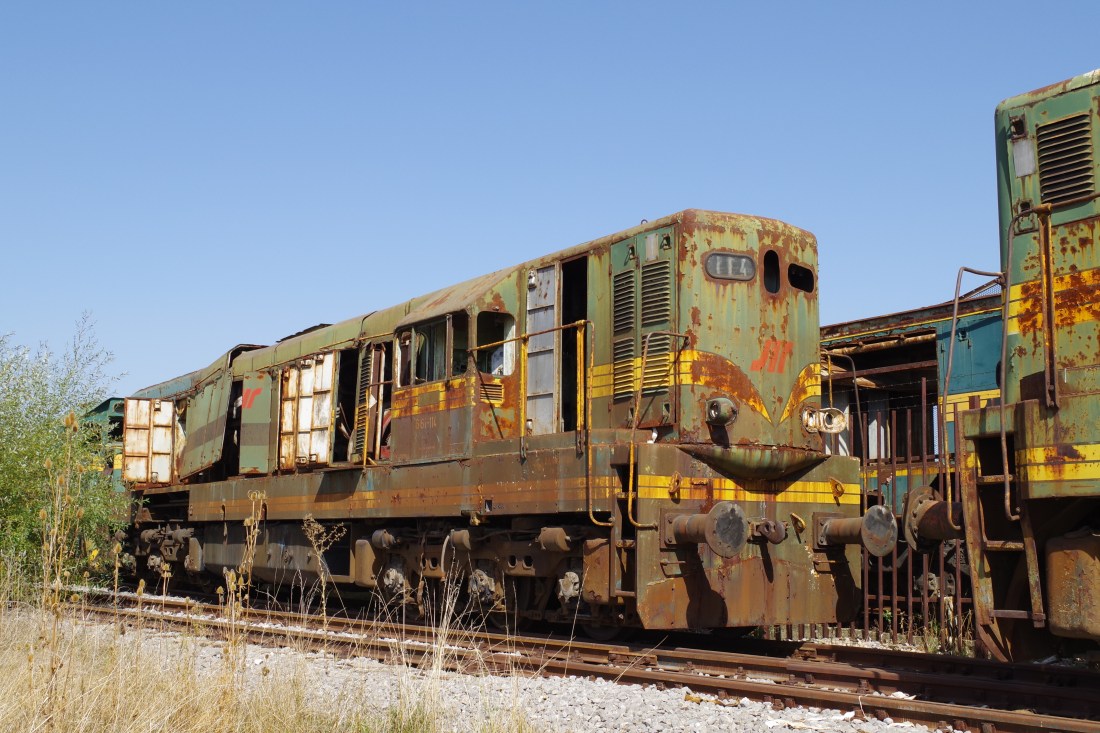
661 114

IMGP2480

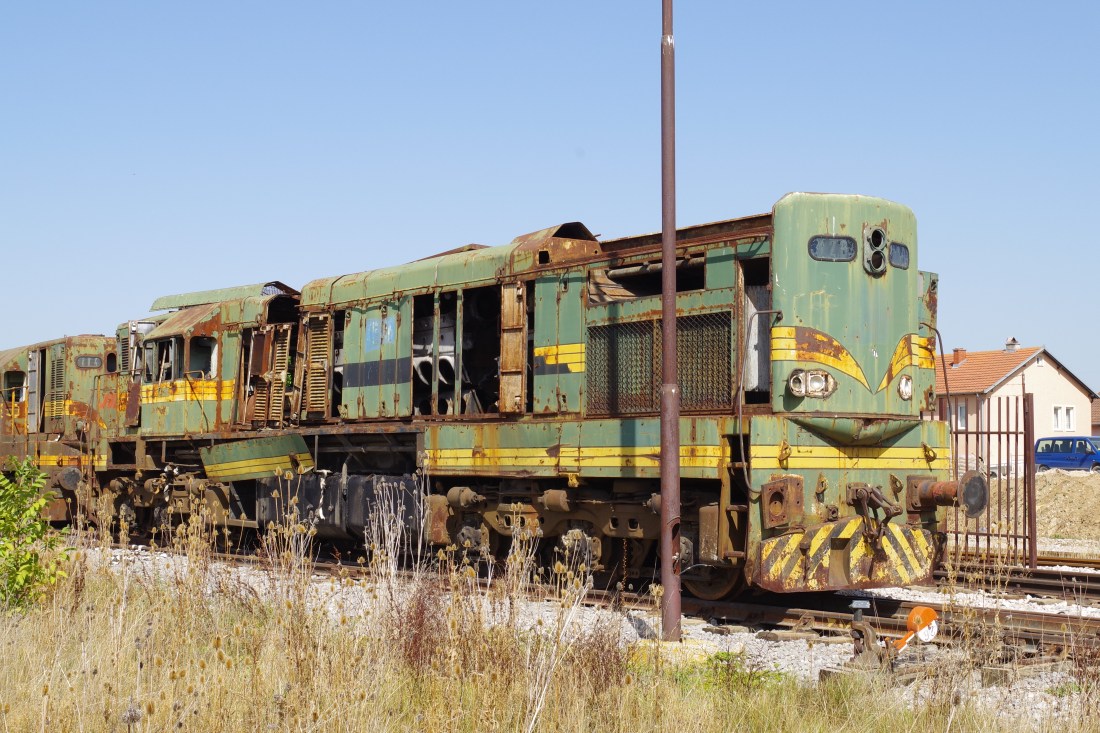
661 128

IMGP2482

2640 006 (ex-661 132)

IMGP2576.JPG

661 203

IMGP2524.JPG

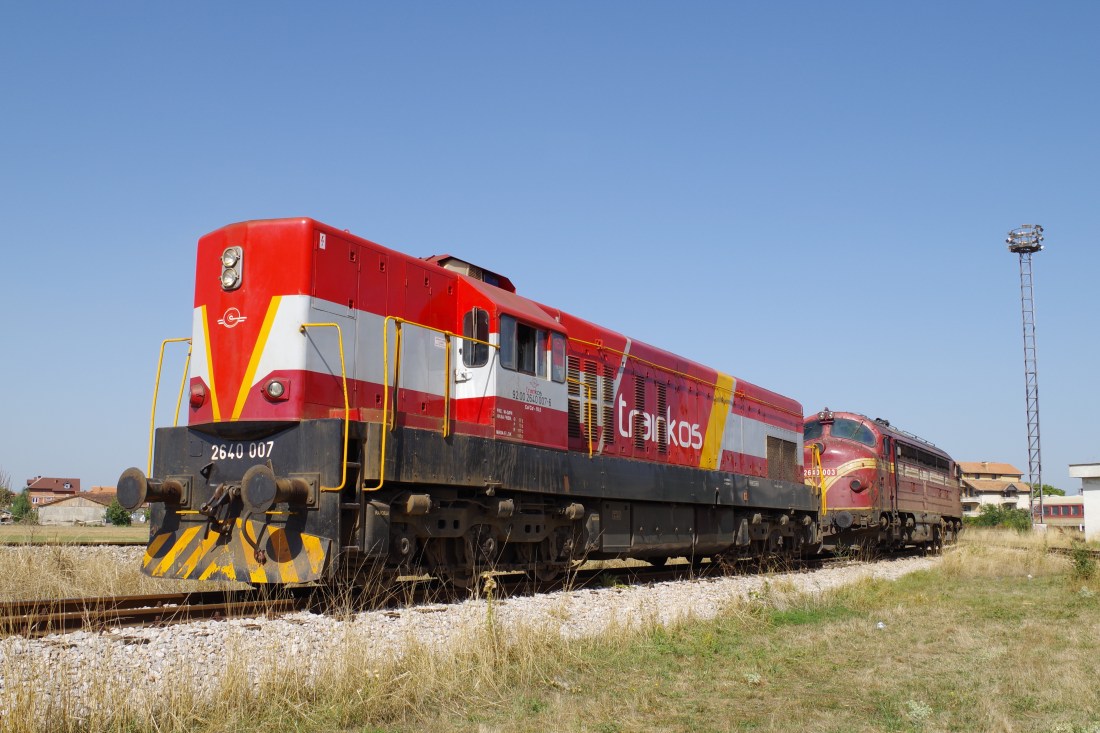
2640 007 (ex-661 228)

IMGP2557.JPG

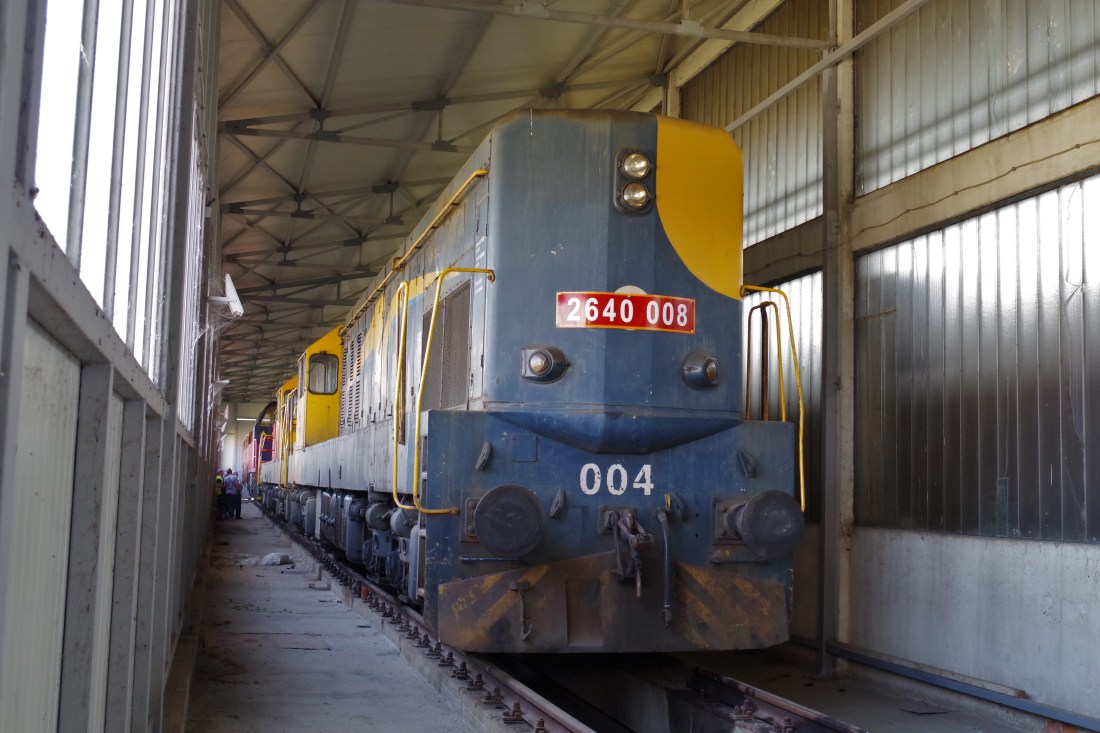
2640 008 (ex-661 231)

IMGP2570.JPG

661 254

IMGP2489.JPG

661 261

IMGP2502.JPG

Ex-JŽ Class 664.0

664 062

IMGP2529.JPG

…and there’s actually a twelfth…

There are a handful of other GM diesels in Kosovo – four Swedish-built NoHABs acquired from NSB (the Norwegian State Railways) and also a curious, unique device now numbered 2640 010.  This machine was built by TŽV Gredelj in Zagreb in 2010, as a heavy rebuild of withdrawn “Kennedy” 661 203 – although in practice only using the bogies and braking system from the 661.  As the “original” 661 203 still stands largely intact, buried in a clump of trees in the scrap line at Fushë Kosovë, for the purposes of this survey the “rebuild” will feature in a future blog post about the new-build locos that Kosovo has obtained!


If you’re enjoying the content of this website, please could I invite you to have a look at how you could support it?  Thanks!

Sunday 2nd July 2017 – V100 haulage bonanza in south-west Germany

IMGP4504

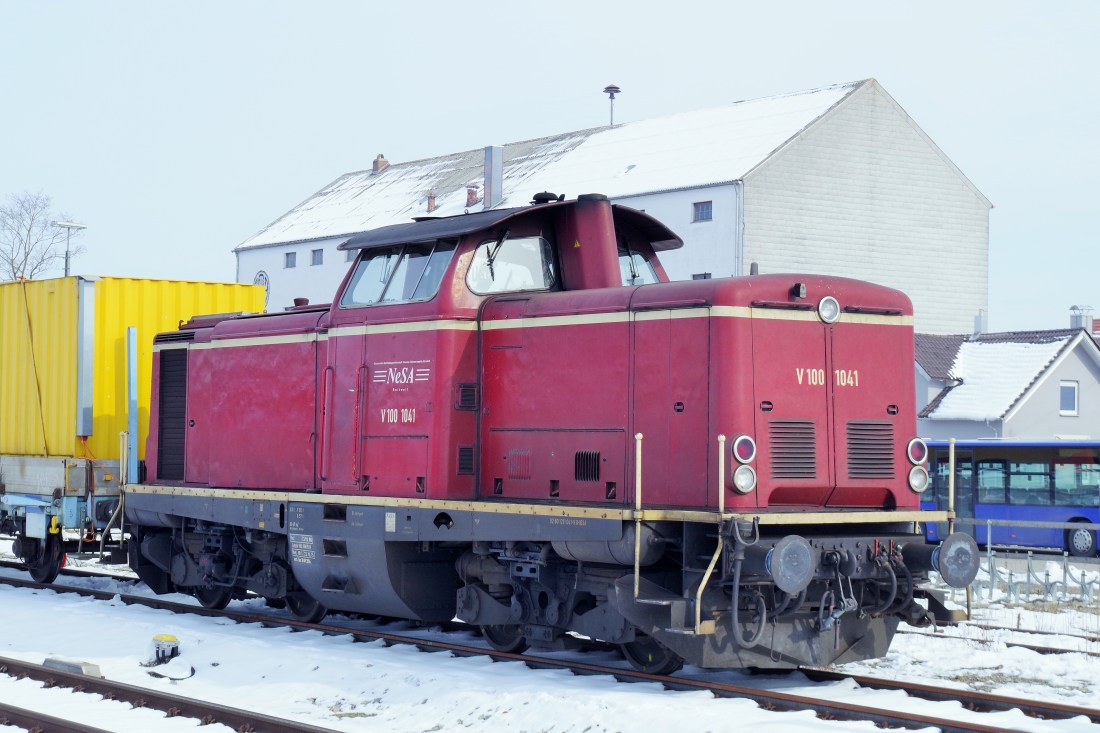
Once a “part of the furniture” across the former West Germany, the centre-cab diesel-hydraulic locos of the V100 family are now fairly rare to pin down on passenger-carrying workings.

Due to a number of simultaneous steam loco failures, however, three of them are planned to be used on passenger-carrying trains within relatively close proximity in the south-west corner of Germany this coming Sunday, 2nd July 2017.  These last minute substitutions are leading to something of an impromptu “diesel gala” in Baden-Württemberg.

Murgtalbahn

A class 213 (presumed to be 213 340) from the Albtal Verkehrsgesellschaft will haul the following:

09:17 Karlsruhe Hbf – Baiersbronn arr 12:10
14:47 Baiersbronn – Raumünzach arr 15:23
15:35 Raumünzach – Baiersbronn 16:10

16:47 Baiersbronn – Karlsruhe Hbf arr 19:38

This is a monthly endeavour by the Ulmer Eisenbahnfreunde / Dampfnostalgie Karlsruhe, ostensibly booked for 2-10-0 steam loco 58 311, but this is currently out of traffic.  “Krokodil” E94 088 (ex-ÖBB 1020 010) is its replacement, but this too is unavailable this weekend, hence the substitution by the 213.  More information here.

Strohgäubahn

212 309 will haul three round trips from Korntal to Weissach as part of GES Stuttgart’s “Feurige Elias” calendar:

09:16 Korntal – Weissach arr 10:11
10:43 Weissach – Korntal arr 11:38
12:16 Korntal – Weissach arr 13:11
14:43 Weissach – Korntal arr 15:38
16:16 Korntal – Weissach arr 17:11

17:43 Weissach – Korntal arr 18:38

Again, this is due to the unavailability of steam traction.  More details here.

Schwäbischewaldbahn

212 084 of the DBK Historische Bahn will also be substituting for their excellent 2-6-2T 64 419, which is temporarily out of traffic too.

09:30 Schorndorf – Welzheim arr 10:35
11:05 Welzheim – Schorndorf arr 12:04
12:30 Schorndorf – Welzheim arr 13:35
14:35 Welzheim – Schorndorf arr 15:34
16:00 Schorndorf – Welzheim arr 17:05

17:35 Welzheim – Schorndorf arr 18:34

More details here.  To note, reaching Schorndorf from Stuttgart is made more difficult this weekend due to engineering work between the two, necessitating the use of rail replacement buses to bridge the gap.

Example move!

It is possible to ride behind all three V100s during the course of the day.  There is more than one way to do it – all of which involve several buses and multiple units – but probably the most palatable is as follows – in a 12-hour day centred on Stuttgart:-

08:48 Stuttgart Hbf – Korntal arr 09:01 (S-Bahn, route S6)
09:16 Korntal – Weissach arr 10:11 (212 309)
10:17 Weissach – Leondorf arr 10:41 (no.634 bus)
10:47 Leondorf – Stuttgart Hbf arr 11:12 (S-Bahn, route S6)
11:45 Stuttgart Hbf – Waiblingen arr 11:59 (S-Bahn, route S3)
12:07 Waiblingen – Schorndorf arr 12:37 (rail replacement bus)
12:50 Schorndorf – Welzheim arr 13:14 (no.228 bus)
14:35 Welzheim – Schorndorf arr 15:34 (212 084)
15:48 Schorndorf – Endersbach arr 16:02 (S-Bahn, route S2)
16:08 Endersbach – Waiblingen arr 16:24 (rail replacement bus)
16:40 Waiblingen – Stuttgart Hbf arr 16:55 (S-Bahn, route S2)
17:08 Stuttgart Hbf – Karlsruhe Hbf arr 17:51 (IC2366)
18:09 Karlsruhe Hbf – Rastatt arr 18:22 (RE4737)
19:09 Rastatt – Karlsruhe Hbf arr 19:38 (213 340)
20:05 Karlsruhe Hbf – Stuttgart Hbf arr 20:58 (IRE4915)

So, in conclusion, desperate, but – as long as everything runs, and to time – eminently doable!

Saturdays 8th July to 30th September 2017: Portuguese metre-gauge Alsthom haulage

I have previously posted about haulage opportunities for haulage by Spanish metre-gauge Alsthom no.1003 on the outskirts of Barcelona this summer here.  However, one of the six such machines sold to Portugal in 1974 will also be working regularly for the next few months.

CP 9004 (ex-1025) will work each Saturday from 8th July to 30th September on a historical train on the Vouga metre-gauge line, situated approximately half an hour south of Porto.

The historical train will depart from Aveiro at 13:40, running approximately 90 minutes to Macinhata do Vouga.  After just over an hour there, it returns to Aveiro – including a 75-minute break at Águeda – arriving back at Aveiro at 19:08.

The above is a link to a video uploaded to YouTube by user EDUARDO BALEIZÃO showing 9004 at work on the Vouga line in May.

The metre-gauge station is on the same site as the “main line” station at Aveiro, which is on the Porto to Lisboa route, the Intercity trains on which see haulage by class 5600 electric locos.  The Porto area also sees sporadic haulage by English Electric class 1400 diesels (based effectively on BR class 20) on IR services to Valença, but is largely unpredictable.

A second Portuguese heritage train operates through the summer – on the Iberian gauge Douro route, between Régua and Tua, with steam loco no.0186 (built 1925 by Henschel in Kassel, Germany), and combined tickets for the two are available that apply a little bit of a discount.

Many thanks again to Charles Hinton for his help with this information.

An introduction to Luxembourg

3006_Noertzange_240217_J Wilcox

3006 departs Noertzange, 24/02/17 (JW)

One of Europe’s smallest countries remains a fair hotbed of electric loco haulage, and its entire network can be covered in a day.  Here is a brief introduction to the country.

The Grand Duchy of Luxembourg, landlocked between France, Belgium and Germany, has a landmass of only 999 miles, and is home to approximately 576,000 citizens – roughly the same number as Sheffield.  It is the quintessential European country, with three official administrative languages (French, German and the local dialect of Letzeburgesch).

Its “European-ness” is underlined by the fact that it is home to the village of Schengen, on the banks of the river Mosel, where the territories of France, Germany and Luxembourg meet.  It was at this point on this river on 14th June 1985 where the Schengen Agreement, the European open-borders travel agreement, was signed.  Luxembourg survives and thrives on free movement across the borders that surround it.
DSC01413

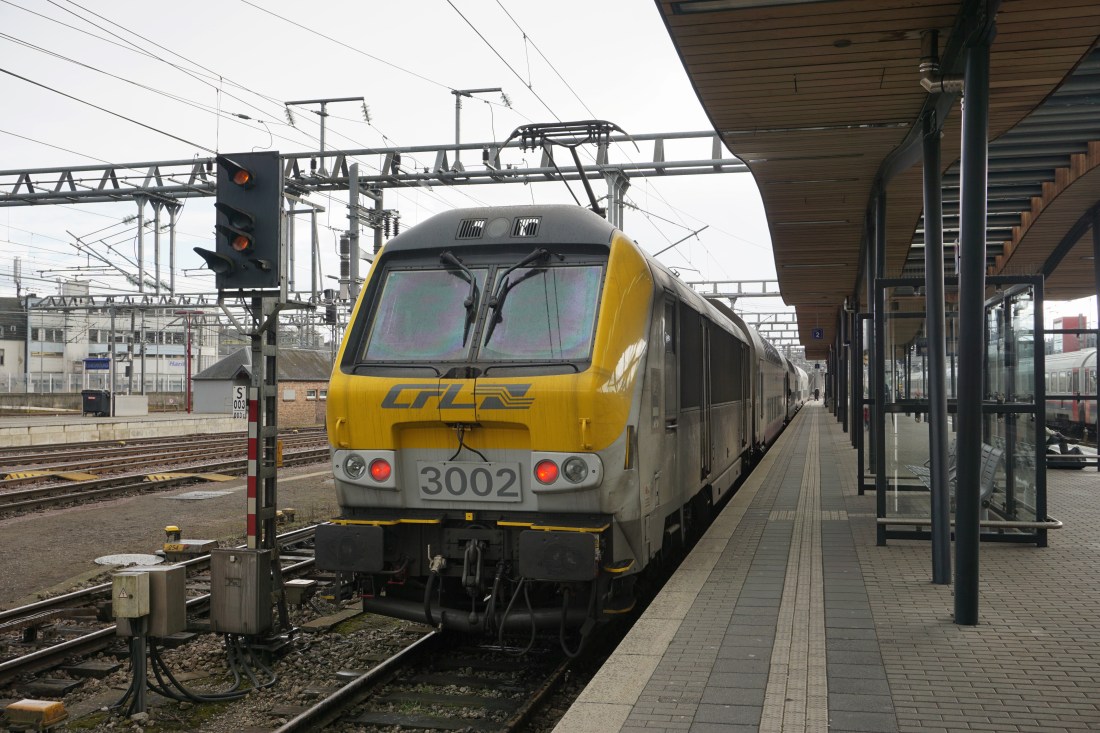
3002 at Luxembourg station, 24/02/17 (JW)

History and Geography

Officially neutral, Luxembourg was overrun by Germany in both world wars; it was actually annexed into Germany from 1942 until its liberation in 1944.  It ended its neutrality in 1948, when the Benelux customs union between Belgium, Luxembourg and the Netherlands came into being, and it joined NATO the following year.  Despite its modern alignment with these two countries, Luxembourg has closer ties to France and Germany both historically and culturally.

The country has two distinctive regions – the northern third, known as the “Oesling”, is a part of the Ardennes massif, a sparsely populated, hilly and forested area that was the setting for much of the fighting in the Battle of the Bulge in 1944 and 1945.  The larger, flatter, more populous southern portion of Luxembourg is the “Gutland”, part of the scarplands of Lorraine.  It is relatively urbanised and contains the country’s eponymous capital.

The face of the country has changed dramatically in recent decades.  As late as the 1970s it was virtually dependent on the steel industry, and belying its tiny size, it was the world’s ninth largest producer of steel prior to the 1974 steel crisis.  However, its manufacturing industry has never been great; much of the steel it produced was exported, massively aided by the arrival of the railway in 1859.  The events of the mid-70s meant that its importance as a steel nation has diminished, although the world’s largest steel producer, ArcelorMittal, is based there.
4004_Berchem_240217_J Wilcox

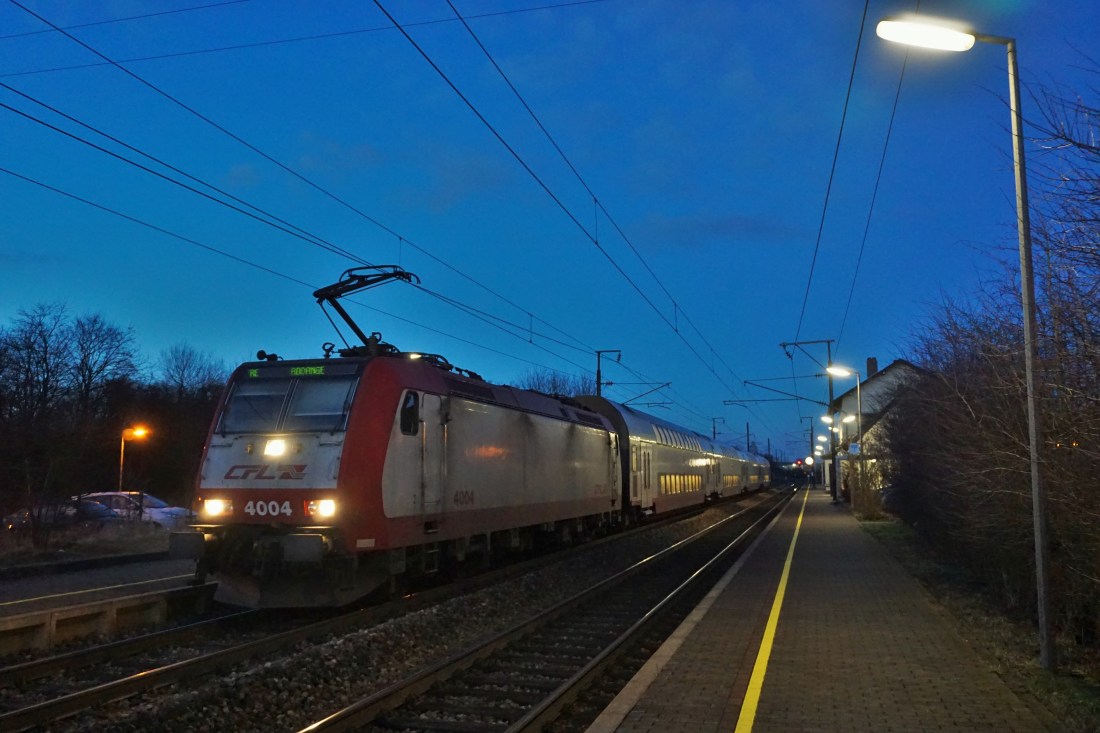
4004 pauses at Berchem with an evening commuter train out of Luxembourg City.  24/02/17 (JW)

Luxembourg was forced to reinvent itself.  With little else by way of natural resources to fall back on, it has turned to banking and finance, which now comprises of over a third of its GDP.  It is now a formidable financial centre, being home, for example, to the European Investment Bank.  However, you don’t need to look too hard in the Gutland to see evidence that steel-making remains a prominent activity.

The development of Luxembourg is non-stop, and construction of new facilities continues apace – locals apparently joke that Luxembourg’s national bird is the crane!  Luxembourg now has the second highest GDP per capita in the world after only Qatar, but despite this, the country was ranked second unhappiest in the world (second only to the African corruption-riddled failed state of Chad) in the “Happy Planet Index” in 2016.

Railway network

The railways of Luxembourg are operated by the Société Nationale des Chemins de Fer Luxembourgeois (CFL).  The majority of its 170-mile network is electrified (including all of its passenger routes), most of which see at least some loco-hauled services.

All routes radiate from Luxembourg City, the station actually being situated over a mile from the city centre itself, with the bus station on its forecourt.

Here is a link to CFL’s online passenger route map.

Rolling stock

An intriguing factor of CFL rolling stock is that it does not possess any truly unique mainline designs – it tagging orders on to bigger ones from neighbouring countries or taking small batches of “off the shelf” designs.

There are two predominant types of electric loco that, between them, handle all of these hauled services.  The older of the two is class 3000, 7,000hp Alstom “Tractis” dual-voltage machines dating from the late 1990s.  20 of these were built – 3001 to 3020 – as part of a joint order with the Belgian Railways for their 60 class 13s, which can themselves be seen operating to Luxembourg on Intercity services from Brussel and Liège, as well as freights.  3001, however, did not last long in service – having entered traffic on 31st July 1998, it was withdrawn with fire damage after only a year’s use, and was finally cut up at the end of 2011.

More recently, CFL has procured a fleet of 20 class 4000 locos (4001-4020), Bombardier TRAXX machines that are a passenger version of DB’s class 185 and SBB’s class 482 designs.

Both types are also seen on freight work, and using their dual-voltage capability, can be seen operating internationally on such duties – the 3000s into France and Belgium, and the 4000s into Germany.

The rest of CFL’s passenger fleet comprises of multiple units – of three types: class 2000 (based on SNCF’s Z11500s), class 2200 “Coradia Duplex” units (as SNCF Z24500) and class 2300 “Stadler KISS” units (as used in Germany, Austria, Switzerland and further afield).

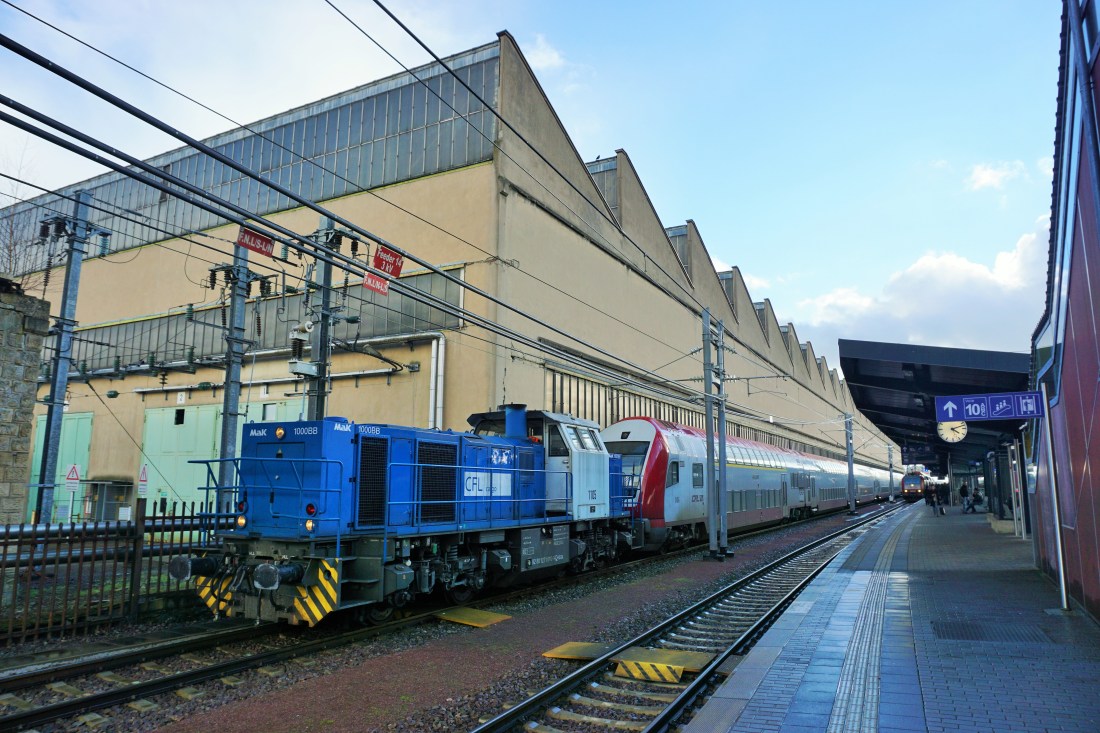
CFL do retain some diesels – some shunters, as well as slightly bigger MaK 1000BBs and Vossloh G1206s for working freights on the small number of unwired routes and sidings.
DSC01423.JPG

MaK 1100BB, no.1505, shunts some coaches at Luxembourg, 24/02/17 (JW)

Times and fares

Timetables for the Luxembourg railways can be found in PDF form here.  All public transport in Luxembourg is fairly heavily subsidised, and therefore it’s quite cheap to get around.  The day rover (“Dagesbilljee“) valid on all trains and buses is great value for €4/day; Luxembourg using the Euro, as does all of its neighbours.

Those lucky enough to be under the age of 20 enjoy free public transport in the Grand Duchy, so long as they are carrying ID that proves that.  However, with effect from 1st March 2020, travel on public transport is set to become free for everyone.

How to get there

There are a couple of options to get to Luxembourg from the UK.  To do so by rail, it is easiest and quickest to catch the Eurostar to Brussels and then change onto one of the hourly Intercity services direct to Luxembourg – which are generally shared by AM96 EMUs and class 13 electric locos.  Alternatively, it’s about a 4½ hour drive from Calais.

The country has one airport, which is currently served directly from Birmingham, London City, Gatwick, Heathrow and Stansted, and Manchester.  It served as a Luftwaffe base during World War 2, and has now carved a niche as a major European airfreight hub.

The number 16 and number 29 buses both link it to the main station, with a journey time of approximately 25 minutes.  The latter stops at Cents-Hamm station, on the route to Trier, on the way.  Traffic congestion is an increasing problem in Luxembourg, which has the highest car ownership level in the world (661 per 1000 inhabitants), although the new tram system, currently under construction, will eventually serve the airport.


If you’re enjoying the content of this website, please could I invite you to have a look at how you could support it?  Thanks!

Selected Wednesdays and Sundays through 2017: Metre-gauge Alsthom power near Barcelona

3rd June 2017 saw the start of an occasional special train near Barcelona with some motive power interest.

The “Montserrat Classic Express” is essentially a daytime dining train on the network of the the Ferrocarrils de la Generalitat de Catalunya (FGC), departing from Sant Boi de Llobregat at approximately 09:30, running north into the Montserrat mountain range to a destination of Monistrol de Montserrat, with a journey time of approximately 90 minutes.  After a break, during which you can travel on the Montserrat rack railway included in the price of your ticket, it departs home, arriving back into Sant Boi at 14:18.

Motive power

The locomotive is planned to be no.1003, a metre-gauge 850hp Alsthom diesel-electric dating from 1956, one of a fairly large (if a little heterogeneous) fleet of locos that led the way with the dieselisation of Spain’s numerous metre-gauge railways in the late 1950s and early 1960s.

https://www.youtube.com/watch?v=u8Er3C2TYfI

The above is a link to a YouTube video uploaded by Andrés Martos showing 1003 on a train in 2015.

When does it run?

Despite claims on its website that it runs on Wednesdays and Sundays through the year, information received is that it runs only on: 12th July, 16th July, 2nd August, 16th August, 27th August, 6th September, 17th September, 20th September, 8th October, 22nd October, 19th November, 3rd December, 17th December and 31st December 2017.

Tickets and Fares

The cheapest ticket available for the round trip on the “Montserrat Classic Express” is €80 and is a non-dining option, although it includes some food at the destination.  The full dining option is available for €130.

Tickets must be obtained in advance from comercial@montserratclassicexpress.com.

How to get there

Sant Boi is situated in the western reaches of Barcelona, approximately 7 miles of Barcelona El Prat (BCN) airport.  FGC services run several times per hour to Sant Boi from Barcelona Plaça Espanya station, with a journey time just shy of 20 minutes.

What can you combine it with?

This is going on not too far from the “Tren dels Llacs”, which operates from Lleida to La Pobla de Segur with standard-gauge RENFE class 308 power.  In particular, Sundays 16th July, 27th August, 17th September, 8th October and 22nd October 2017 all follow Saturdays where the “Tren dels Llacs” is 308-hauled.

Barcelona itself is, of course, one of the world’s top tourist destinations, so it’s certainly rational to do this as part of a non-railway holiday in that area.  However, if you do wish to look at other diesel haulage while you’re in Spain, I’ve put together a brief round-up of what is on offer here.

Many thanks to Charles Hinton for the information on this operation.

British Rail no.99013 – withdrawn in 2017!

It is well known that examples of British Rail classes 14, 20, 37, 47, 56, 58, 59, 66, 77, 86, 87 and 92 have been exported to countries on the continent, and indeed some still operate on freight services in their adopted homes.  However, less well known is that another TOPS-numbered “BR” machine from the 1970s remained in front-line passenger-carrying service in Italy until 2017.

OK, so maybe this is scraping the barrel somewhat, but it gives a small example of the very many things of wider railway interest that can be found in Europe with little difficulty.

15 British Rail train ferries gained TOPS numbers as “class 99”; of these, only four remained in service at the beginning of 2017 – one in Canada, one in the United Arab Emirates, one in Cyprus, and one in Italy.  The latter was 99013 – the former MV Saint Eloi – and it was withdrawn in March.

Saint Eloi began its story on 24th November 1969, when a ro-ro passenger and train ferry was ordered by Sealink’s French subsidiary, the Société Anonyme de Navigation Angleterre-Lorraine-Alsace (ALA).  Named after the patron saint of metalworkers – to whom a large church in Dunkerque is dedicated – after protracted delays the vessel finally entered service on the Dover to Dunkerque route on 12th March 1975.  Saint Eloi, as well as the ALA, became fully owned by the British Railways Board on 23 March 1977.

As a multi-purpose ship, Saint Eloi was mainly used for freight services, but also conveyed the Wagons-Lits sleeping cars of the London to Paris and Brussels “Night Ferry” service, which ended in October 1980.  She sailed her last voyage on the Dunkerque route on 24th April 1988, being switched to the Dover to Calais route, where her train ferry capability would not be required.  After a brief sojourn covering other ships for refit in the Irish Sea, she was renamed Channel Entente, but her service in the Channel under this guise was to be short-lived.

She was sold to the Isle of Man Steam Packet Company in 1990, and she was quickly pressed into service on that company’s services between Douglas and Heysham and Liverpool.  Later in the year, she was sent for refit and was renamed King Orry, and settled in as a Manx staple throughout the 1990s.

The King Orry’s final day in service with the “Steam Packet” was 28th September 1998, after which she was sold to the Italian firm Moby Lines.  She sailed to the Ligurian Sea the next month and gained the name Moby Love and a rather garish white livery, prominently featuring the line’s whale logo (as in Moby Dick!). 

In April 1999, she entered service on Moby’s route between Piombino, on the western coast of Italy south of Pisa, and Portoferraio, on the island of Elba – and she remained in use on this route until March 2017, when she sailed to Genova, where she is now laid up.

The above is a link to a video uploaded to YouTube by JustFerries showing the ferry in its final guise.


If you’re enjoying the content of this website, please could I invite you to have a look at how you could support it?  Thanks!

1st and 2nd July 2017: CFTV gala at Saint-Quentin

1st and 2nd July 2017 sees a special event at a heritage line in northern France which will be of interest to British enthusiasts.

The Chemin de Fer Touristique du Vermandois (CFTV) is based at Saint-Quentin, roughly a third of the way between Lille and Paris, and about two hours’ drive from Calais.

The event

The event on Saturday 1st and Sunday 2nd July 2017 celebrates the CFTV’s 40th anniversary, and of the most interest to the British haulage enthusiast will be the steam and diesel shuttle trains that will run between St-Quentin-Gauchy and Mézières-sur-Oise, and between Mézières-sur-Oise and Ribemont.

The first departure from St-Quentin-Gauchy will be at 10:00 and the last from Ribemont at 17:00.  A day ticket costs €15 and a weekend ticket €25; discounts available for online purchase here.

Traction

Trains will be handled by North British 2-8-0 steam loco 140-C-314, built in Glasgow in 1917 and celebrating its centenary, and BB66252, a 1,100hp single-cab diesel-electric built by Alsthom in 1967.

Originally it had been hoped and advertised that BB64066 and BB67456 of the Cellule de Matériel Radié (CMR) of SNCF (effectively its “heritage fleet”), but these machines cannot now attend.

The timetable is here.

Other activities

Mézières-sur-Oise station will also see a display by the Association 14-18 en Somme, and 11:00 on the Sunday will see a commemoration of the war dead with flag bearers.  This area of France, of course, has World War 1 history everywhere you look, and it is great that this is remembered 100 years on.

More prosaically, but still of interest, Ribemont will host a model railway exhibition and a display of classic cars.

Getting there

Very helpfully, the CFTV have an English-language “how to get here” section on their website, telling you everything you need to know.  Link here.

It sounds like a really interesting event!