December 2017 and May 2018: Two multi-loco “NoHAB” celebrations in Hungary

Two separate events have recently been advertised, both intending to feature multiple Swedish-built “roundnose” NoHAB diesel-electrics in and around Hungary.

The history and background of the fleet of General Motors-engined diesel-electrics supplied by the Swedish firm of Nydqvist & Holm AB (“NoHAB”) to Hungary has previously been explored in an article on this site – and it’s an interesting tale, lurking in the iciest depths of the Cold War.  May 2018 marks the 55th anniversary of the arrival of the first machine – M61.001 – and therefore it’s appropriate that they get some time in the limelight.

30th December 2017, Budapest to Tapolca

The first event is on Saturday 30th December 2017 and is a variation on something that has become a bit of an annual institution – similar events having occurred on 30th December 2016 and 22nd December 2015 – taking 8 NoHABs (all 6 surviving M61s and 2 former Danish MYs, one of which has just celebrated its 60th birthday!) from Budapest to Tapolca and return.

The above is a link to a video uploaded to YouTube by user Gábor Szőcsényi of 2016’s 8-NoHAB event.

The 2017 event, however, will have something of a twist.  Whereas in the past, all 8 locos have been the head of the same train simultaneously (although not all powering at the same time, causing some headaches for the haulage enthusiasts…), this year will see two separate trains each with 4 machines on the sharp end.

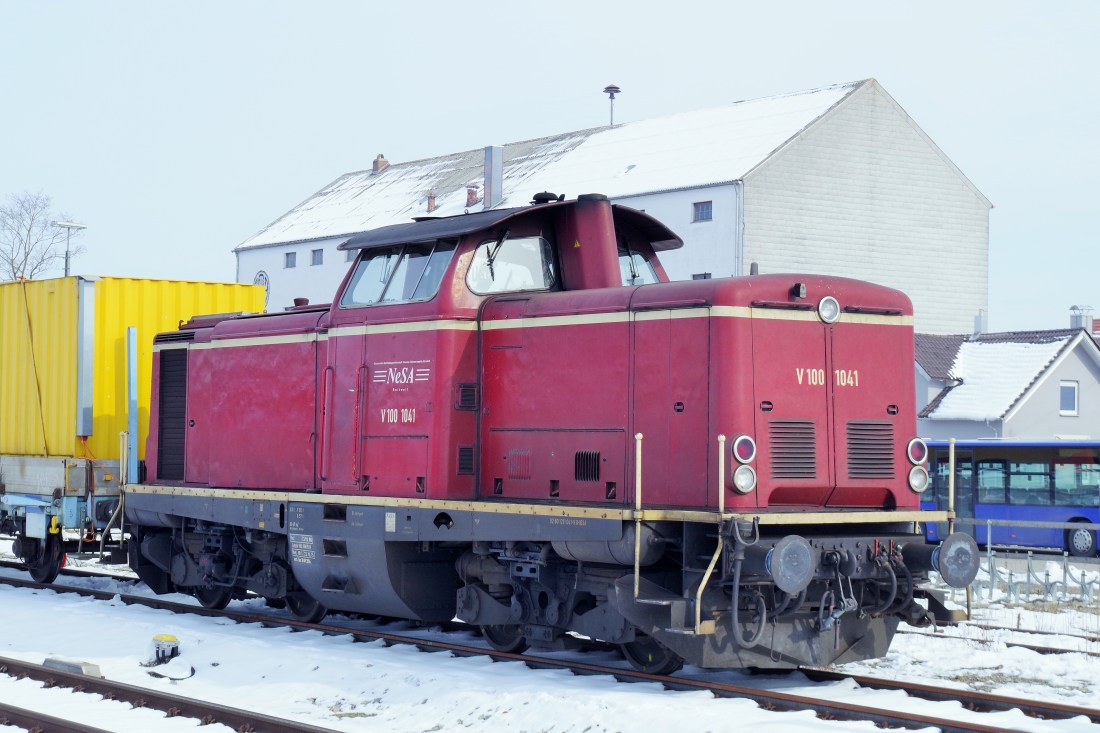
One, named the “Vulkán”, will be powered by M61.019, 459 021 (ex-DSB MY1125), 459 022 (ex-DSB MY1156) and M61.017.  The other, named the “Panorama”, will be powered by M61.001, M61.006, M61.010 and M61.020.

Both depart from Kelenföld station in the Budapest suburbs at 08:55 and run to Székesfehérvár, from where there will be a parallel departure of the two trains at 09:55.  From there, the “Vulkán” takes the route along the north shore of Lake Balaton, whereas the “Panorama” heads around the south side – the two trains converging on the M61s’ spiritual home of their later years of Tapolca.  Each train will return to Kelenföld via the opposite route.

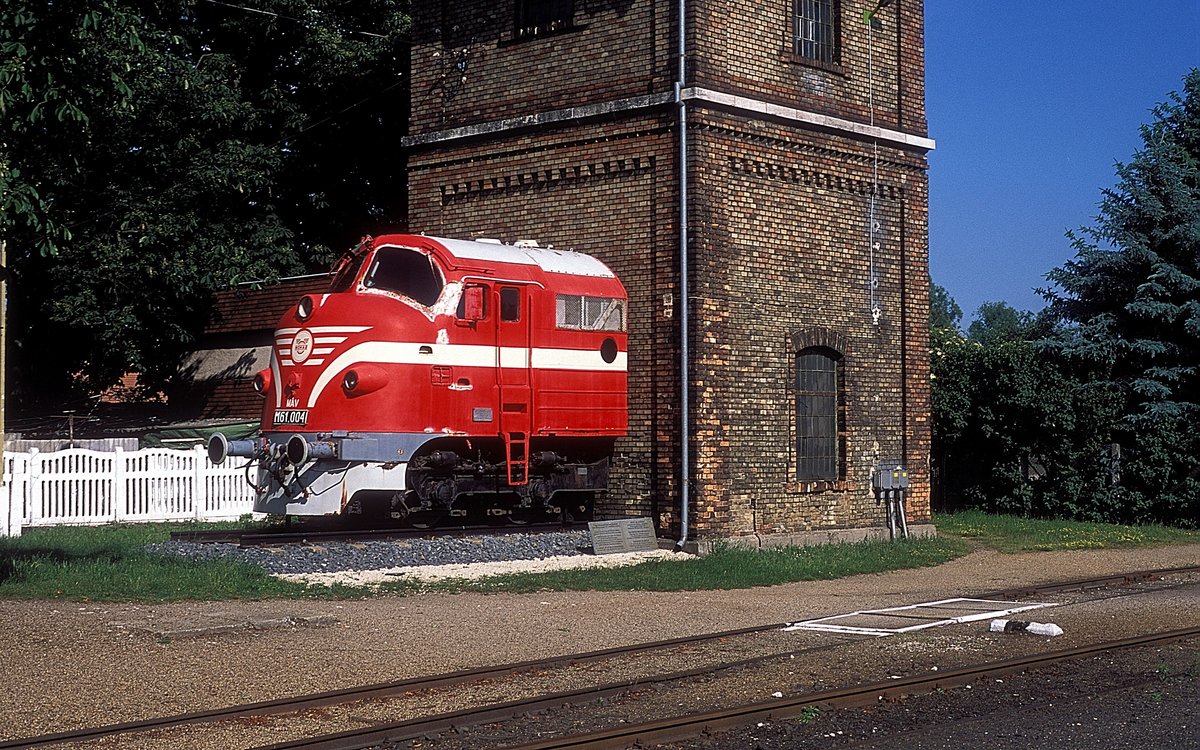
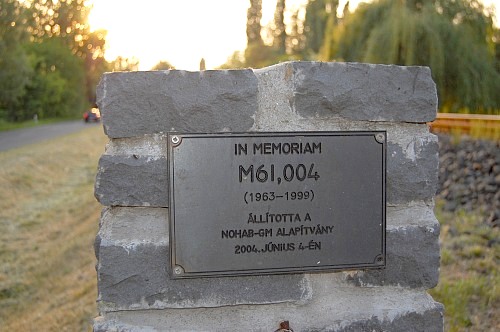
Additionally, the cab of M61.004 will be able to be seen at Tapolca.  It has been on display in the vicinity of the station since the 2015 event.  This loco was a devastating loss; having already been earmarked for preservation, it struck a fallen tree, derailed and was written off at Badacsonylábdihegy on the north shores of Lake Balaton on 4th June 1999.  A memorial stone to the loco has stood at the trackside at the accident site since the 5th anniversary, in 2004 – and, of course, both charters will also pass this spot during the day.

Fares for each train are 5,990 HUF (£17.10 at current prices).  It does appear that if you wish to travel behind all 8 during the day, you will need to purchase a separate ticket for each train, but I’m sure you will agree that even then that would still represent superb value for money.  More details here.

10th-13th May 2018, Hersbruck to Budapest

A separate event for those with a significantly larger budget has been advertised by the German firm of IGE Erlebnisreisen; a multi-day affair stretching from Thursday 10th May 2018 to Sunday 13th May 2018, featuring 5 of the 6 surviving M61s (the only absentee from the plan as currently advertised is M61.017) along with Altmark Rail’s ex-DSB loco MY1149.

Above is a link to one of Kaspertog‘s videos of MY1149 at work for Altmark Rail in Germany in 2014.  This loco will work the trunk sections of the IGE tour in May 2018, it being a long way from its Danish homeland when it rolls into Budapest…

Kicking off from Hersbruck (near Nürnberg) with MY1149, it runs via the main line through Regensburg, Passau, Linz and skirting Wien as far as the Hungarian border at Hegyeshalom, where it is joined by M61.001 for a mainline blast to Budapest.

On the Friday, MY1149 is joined by M61.010 and M61.019 for a circular trip around the lake with a break in Tapolca – out via the north shore and back via the south.

The Saturday sees M61.006 take the train from Budapest Nyugati to Balassagyarmat, on the Slovakian border, and then back to the railway museum in Budapest whereupon there will be a photographic gathering of “as many NoHABs as possible”.

The return on the Sunday is as per Thursday’s outward, but the pilot loco to Hegyeshalom is M61.020.

The total fare for train travel only (not including accommodation) for the four days is €949 (£843.10 at current prices).  The organiser has stated that a minimum number of 130 participants signed up by 28th February 2018 is necessary in order for the tour to run.

More details here.

Other Charters

Additionally, Continental Railway Solution – the Hungarian company that used ex-British Rail class 47, 47375 on a ground-breaking railtour in May 2017 – have recently posted on their Facebook page (link below) that they are hoping to run a charter from Hungary to Kosovo and back using GM power all the way in 2019, the implication being that NoHABs will feature for at least parts of the itinerary.

This idea is reminiscent of a railtour that ran in August 2009 from Augsburg (in south-west Germany) to Kosovo and return that was intended to feature NoHAB power throughout – although sadly MY1125 had to be piloted by Serbian locos (electrics and also a GM class 661 “Kennedy” diesel) when in that country.  Additionally, the main train only reached Zvecan, as the contentious political situation in Kosovo prevented it going any further – passengers were conveyed south into Kosovo by road transport in order to travel behind the former Norwegian class Di3 NoHABs eking out their life there.

Mitteldeutsche Regiobahn loco haulage – Leipzig to Chemnitz

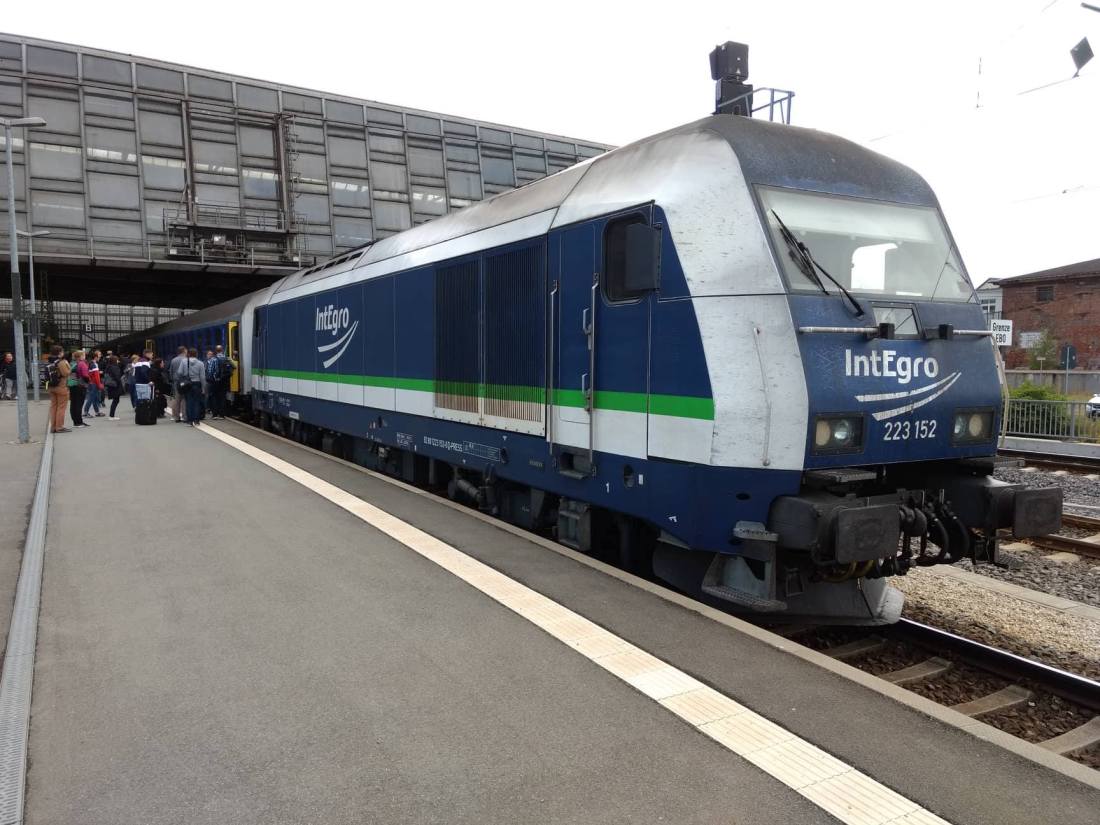
Possibly the least-visited area of diesel loco haulage in Germany at the moment – admittedly possibly in part due to the “blandness” of the locos concerned – is the route between Leipzig and Chemnitz, operated by Siemens Eurorunner class 223s.

The area of the former German Democratic Republic (GDR; East Germany) is now a desert in terms of diesel locomotive haulage on passenger trains.  The cessation of through running to Szczecin by EC178/EC179 “Alois Negrelli” in Summer 2012 left Summer weekend-only 218-hauled Intercity portions on the island of Usedom as the only booked mainline diesel-hauled trains in the entire (former) country.

36188180_1877789762264371_2095210902415474688_n

223 055 at Chemnitz Hbf (Photo: Darren Fawcett)

The December 2015 timetable change, however, brought something of an oasis to this desert, when the private Mitteldeutsche Regiobahn (MRB) took over the operation of one particular route from the incumbent DB Regio.

The unelectrified 38-mile cross-country route between Leipzig and Chemnitz links what were two of the four largest cities in the GDR – although, of course, Chemnitz was known as Karl-Marx-Stadt in those days.  Chemnitz cannot be described as particularly inspiring, being notable for having lots of Communist-era architecture, being the “fallback” target for Allied bombers in February 1945 if Dresden had been covered by cloud, and being widely believed to have the lowest birth rate of any city in the entire world.  The route will never win any scenery awards, although there is some interest in the area – for example, it passes within 10 miles of Colditz Castle, the site of the wartime POW camp that was the subject of a famous 1955 movie.

Anyway, back to the trains!

223152.jpg

223 152 at Chemnitz Hbf (Photo: Darren Fawcett)

Motive Power

The trains are formed of Siemens “Eurorunner” class 223 diesels – noted for being almost silent! – and four- or five-strong rakes of GDR-era Halberstädter carriages, operated in push-pull mode.

The pool consists of the three machines that were in the fleet of NOB on the “Marschbahn” route prior to their replacement by the troubled 245.2 fleet223 053223 054 and 223 055 – plus two locos that were new to passenger work; 223 144 and 223 152.

However, at the time of writing, 223 152 had been hired to ALEX for use on diesel-hauled passenger services in the Bayern region.  In September/October 2017, it had previously been engaged on the island of Rügen with one carriage, replacing the usual class 650 single-car DMU on the shuttle from Bergen auf Rügen to Lauterbach Mole while it received works attention.

Moves

Three sets of stock (and, consequently, three locos) are in use 7 days a week between Leipzig and Chemnitz each day, and moves are very easy to put together.

Departures are hourly from each end (xx:20 from Leipzig and xx:31 from Chemnitz) with an end-to-end journey time of 59 minutes.

Heading towards Chemnitz, the “leaping shack” is Geithain (+5), and heading towards Leipzig, Narsdorf (+9) and Bad Lausick (+39).  Therefore all three turns can be covered in, for example, a “Leipzig > Geithain > Bad Lausick > somewhere” move in just over an hour.

The above is a link to a YouTube video uploaded by user SvenRailworld showing 223 054 making a sprightly departure from Leipzig Hbf in February 2016.

Controversy

Although pleasing from an enthusiast’s perspective to see a revival of loco-hauled operation an environment where it is otherwise in its death throes, it has not been universally welcomed by the locals.

The increased noise levels (not in terms of engine noise, but of wheel-on-rail and of the cast iron brakes of the stock) have gained much criticism in a country that culturally values silence – and that is not to mention that lack of air conditioning, slam doors etc that have generally been perceived as a backwards step by those that use them every day.

There have also been reports of trains with no serviceable toilets, as well as (unrelated to the rolling stock) driver sickness causing cancellations on the route.

223053.jpg

223 053 at Leipzig Hbf (Photo: Darren Fawcett)

The Future

The MRB have the franchise for the route until 2023 – at least – and it seems as if the class 223 locos and Halberstädter stock will continue in use until then, although it must be wondered whether the sheer weight of public discontent will force another solution sooner.

Update 31/03/18: The above words must have been prescient as it was announced in the last week of March 2018 that replacement coaching stock will be obtained ASAP.  Also, a further loco will be available after Easter 2018 to provide greater operational resilience, although its number is not yet known.

Marschbahn woes to continue

DSC01860 (2).JPG

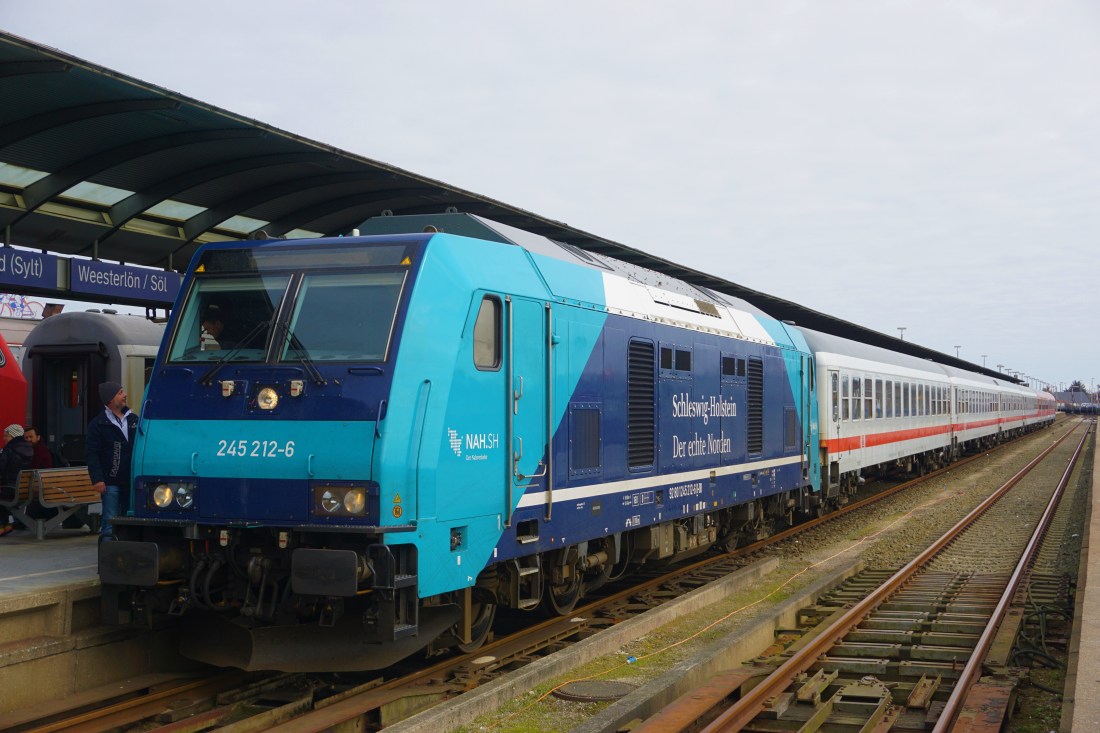
245 212 at Westerland on a rake of drafted-in DB Intercity stock, 08/04/17 (JW)

Regional traffic on the Hamburg to Westerland “Marschbahn” route has been suffering from disruption for some time, and this does not look to end any time soon.  From a haulage and photography perspective, this may result in some interesting opportunities to remain present until Spring 2018.

This passenger rail traffic on the Marschbahn is some of the most important in Germany, given that the railway represents the only fixed transport link between the mainland and the North Sea island of Sylt, via the Hindenburgdamm causeway.  Sylt is a popular tourist destination, and it relies on the train service over the causeway to function effectively – all road traffic has to be conveyed on trains to and from Niebüll, and this itself has been a particular political hot potato over recent years.

The operation of the Hamburg to Westerland regional passenger trains passed from DB Regio to the private operator Nord-Ostsee-Bahn (NOB) at the December 2005 timetable change.  NOB retained the franchise for 11 years, operating the service with little fuss with a mixture of Siemens class 223 and MaK class 251 diesel locomotives.

Motive Power

2014 marked the root of the current problems.  The organisation that co-ordinates public transport in Schleswig-Holstein – now known as “NAH.SH” – decreed that a fleet of 15 brand-new Bombardier Traxx class 245.2 locomotives (245 201-215) would be procured by the investment company Paribus for use specifically on the Marschbahn regional trains, regardless of operator.  These entered traffic from late 2015.  At about the same time, it was announced that the franchise would be returning to DB Regio as of the December 2016 timetable change, using the 245.2s and the existing Bombardier “Married Pair” carriages.

However, problems with the 245.2s have been legion since day one.  Initially, they suffered from frequent overheating issues and required fire brigade attendance worryingly often.  Software problems have been frequent and oil and coolant issues have been frequently reported as the cause of failures too.  This is over and above an acceptable level of “teething troubles” and is clearly unsustainable. In October 2017 it was announced that they must again go through a rolling programme of works visits for software updates and that the fleet is not expected to be back at the planned-for level of availability until Spring 2018.

Part of the problem, it is commonly believed by railwaymen and observers alike, is that the 245s are very technology-heavy locomotives, a fleet of which has been ordered without any real prototype having been tested.  Throughout the entire history of (West) German diesel and electric motive power, all new technology has been thoroughly tested on the duties expected to be carried out before an order is placed – here, we are seeing issues being discovered for the first time on the front line.  The Marschbahn is far from flat and the locos get very warm on these demanding duties.

With a full fleet of 245.2s unable to be fielded, DB Fernverkehr Niebüll depot’s allocation of 245.0s (245 021-027) have been pushed into service on these diagrams, with at least one such loco being in use on these workings each day.  Originally procured to replace pairs of 218s on Intercity and car train workings, their own poor account of themselves has seen them generally relegated to half-length Niebüll to Westerland car trains only – although it is technically possible to get haulage from these (thanks to the “Sylt Shuttle Plus” DMU workings that attach to the rear of the car trains – article on this in production), they are otherwise very rare on passenger trains.

Additionally, a number of class 223s and 251s have been called back to the Marschbahn to help prop the service up.  It is unclear whether these machines will be easily ridden behind once the 245.2s are back in action.

Only one class 218 “rabbit” diesel-hydraulic working has been recorded on the regional traffic since the troubles began – when 218 381 piloted an early morning southbound service to save on a light engine path.  Further 218 use is not expected on these services as they are booked to be worked entirely by drivers who no longer sign them.

October 2017 has also seen problems with class 245s hit the headlines in the Frankfurt area – perhaps surprisingly given they have five locos (245 016-020) for four very leisurely peak hour-only diagrams.  Commuters were reported as being “left in the lurch” specifically by 245s, which suffered three fires in just eight days.

Of note, the Intercity traffic on the Marschbahn – almost entirely in the hands of pairs of 40-year-old class 218s – is not affected.  These locomotives continue to provide sterling and reliable service, and some are even being put through Bremen works even now, ostensibly to continue to work on Intercity duties on this route until 2025.

Carriages

The “Married Pair” carriages are also providing trouble.  On 11th November 2016, a coupling defect was identified with one of the vehicles that led to the entire fleet of 90 being immediately withdrawn from traffic.  Even now, nearly a year later, only 68 are back in service.  This has led to all manner of scratch sets being formed from withdrawn Intercity and “fresh air” regional stock obtained from across Germany.

Indeed, DB Regio, which inherited the fleet at a time when none of the vehicles was operational, are apparently considering pursuing NOB for some form of compensation.

Lausitzer Dampflokclub provisional 2018 railtour dates

Here is a list of provisional railtour dates for the Lausitzer Dampflokclub for 2018.  As far as I am aware, some of these have yet been advertised, let alone bookings opened, so please therefore treat this list in the spirit it is intended – purely to help you with as much advance warning as possible over what they are trying to do.  I do not want the LDC on the receiving end of any negativity if these plans do not come to fruition in the hoped-for way.

The group is currently engaged in fundraising to repair their steam loco 23 1019 after damage sustained at Chemnitz.  Should you wish to book on any of these, you will be helping them in this aim, when indeed bookings open.


17th March 2018

V60 diesel: 07:30 Cottbus to Schwarze Pumpe power station area and Cottbus  Sold out

24th March 2018

Class 232 Cottbus to Dresden for 50 3648 (steam) forward to Hradec Kralove.  Link.

7th April 2018

52 8079 (steam): Cottbus – Elsterwerda – Dresden for the Dampfloktreffen event, and return.

14th April 2018

V100: Cottbus – Niederfinow and return.

28th April 2018

52 8079 (steam): Cottbus – Guben – Wolsztyn for the Dampflok-Parade.

5th May 2018

03 2155 (steam): Cottbus – Wroclaw and return.

10th May 2018

Class 772 “pig taxi” DMU – or V100+stock “bei Bedarf” (if necessary): Cottbus – Weisswasser for a trip on the Bad Muskau Waldeisenbahn (not currently advertised – TBC)

19th May 2018

Class 143 Cottbus to Dresden for 50 3648 (steam) forward to Mlada Boleslav

26th May 2018

18 201 (steam) – Cottbus – Elsterwerda – Dresden Hbf – Bad Schandau and return (not currently advertised – TBC)

9th June 2018

03 2155 (steam) – Cottbus – Forst – Wroclaw and return (not currently advertised – TBC)

10th June 2018

03 2155 (steam) – Cottbus – Görlitz and return

23rd June 2018

35 1097 (steam) – Cottbus – Görlitz – Liberec – Tanvald – Harrachov and return

30th June 2018

Class 772 “pig taxi” DMU: Cottbus – Calau – Senftenberg – Schwarzkollm and return

7th July 2018

143 559: Cottbus – Frankfurt (Oder) – Berlin Hohenschönhausen – Ostseebad Binz (optional trip to Lauterbach with 86 1333 (steam) then on the “Rasender Roland” narrow gauge steam line)

15th July 2018

V60: Cottbus – Calau – Senftenberg – Schwarzkollm and return

11th August 2018

Class 772 “pig taxi” DMU: Cottbus – Finsterwalde and return

11th August 2018

01 509 (steam): Cottbus – Lübben – Berlin Lichtenberg – Berlin Gesendbrunnen – Warnemunde and return for Hanse Sail 2018

1st September 2018

18 201 (steam) last working before withdrawal from traffic for major overhaul: Cottbus – Falkenberg – Halle (Saale) to Meiningen for Dampfloktagen and return (not yet advertised – TBC)

1st September 2018

Class 143 electric: Cottbus – Frankfurt (Oder) – Berlin Stadtbahn – Potsdam Hbf – Wittenberge for Brandenbergtag and return (not yet advertised – TBC)

29th September 2018

52 8131 (steam): Cottbus – Elsterwerda – Coswig – Meissen and return (not yet advertised – TBC)

6th October 2018

“Class 245 diesel” (may mean Class 285 on previous form): Cottbus – Falkenberg – Wittenberg – Dessau – Wernigerode for a trip up the Brocken with a narrow gauge steam loco (not yet advertised – TBC)

3rd November 2018

V100 diesel loco: Cottbus – Senftenberg – Pulsnitz for the Pfefferkuchenmarkt and return (not yet advertised – TBC)

1st December 2018

03 2155 (steam): Cottbus – Görlitz – Wroclaw and return (not yet advertised – TBC)

8th December 2018

“Class 245 diesel” (may mean Class 285 on previous form): Cottbus – Falkenberg – Wittenberg – Dessau – Quedlinberg for Christmas market or optional Christmas journey on the Harzer Schmalspurbahn (not yet advertised – TBC)

15th December 2018

52 8079 (steam): Cottbus – Görlitz and return (not yet advertised – TBC)

10 years ago…

Switzerland 07 283

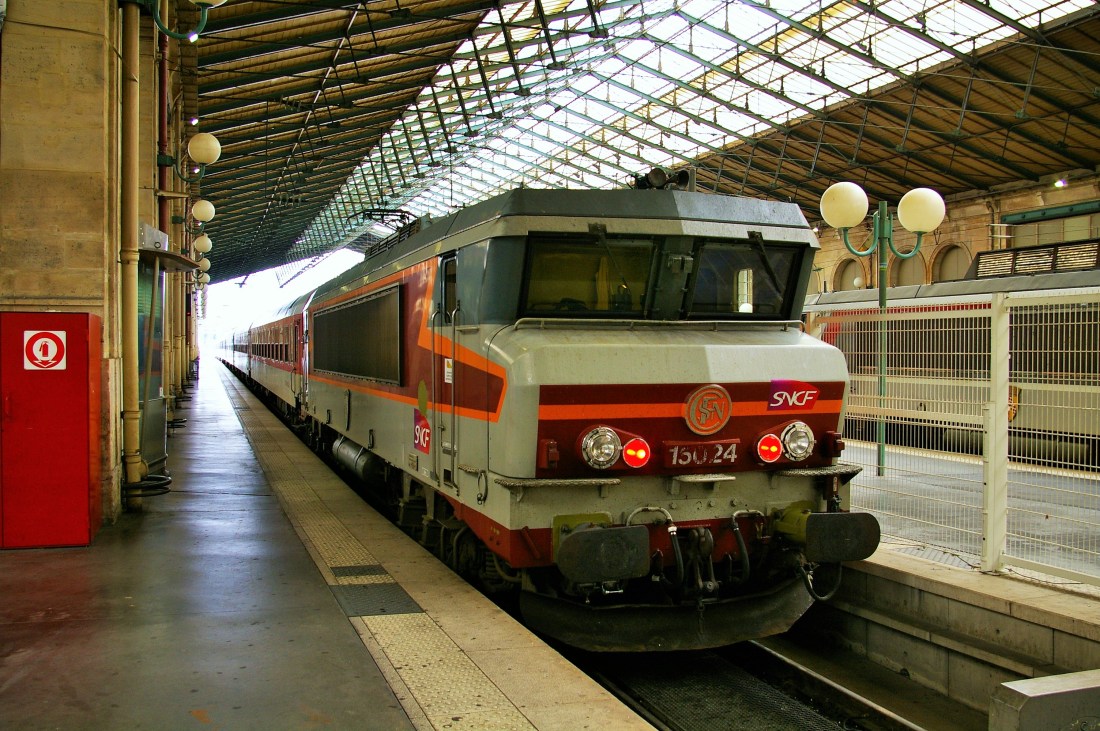
BB15024, Paris Nord, 02/09/17 (JW)

This relatively unremarkable photo of BB15024 on the blocks at Paris Gare du Nord was taken 10 years ago this week – Saturday 2nd September 2007.

What makes it noteworthy is that I didn’t intend to be there. In fact, I didn’t even intend to be in France. This train was the Hamburg-Paris overnight, which after five consecutive overnights mainly chasing 218s in Germany, I was using as my taxi from Hamburg to Brussels, for my pre-booked Eurostar back to Waterloo, home for a de-rance and then a ticket for Aston Villa v Chelsea… What could go wrong?

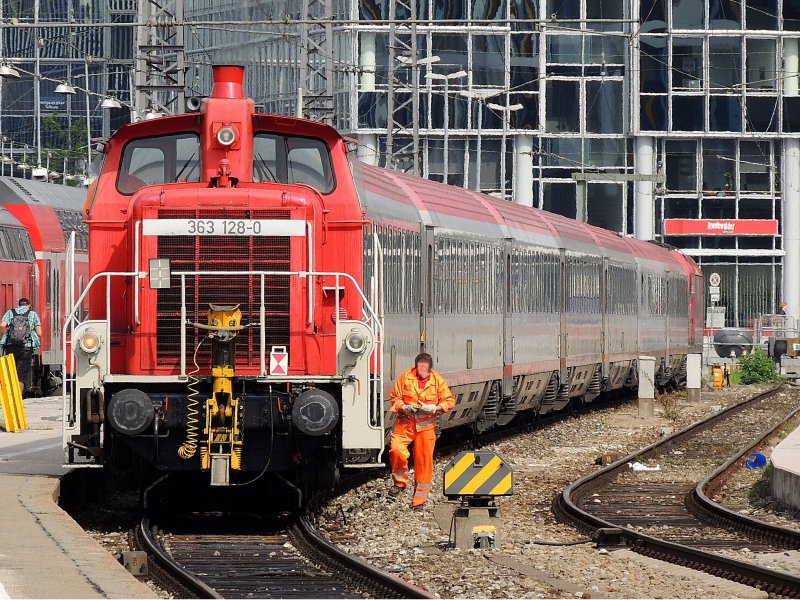
Anyway, a DB class 101 powered us south from Hamburg to Dortmund, where I ensured I was awake to see 363 128 shunt our portion onto the coaches from Berlin. We were then 120-powered via Mönchengladbach to Aachen. I again ensured I was awake to see not only our relieving Belgian loco (2705) but also our banker, which was the big Ludmilla 241 805 (ex-232 284) and to walk to the far end of the train to enjoy the Kolomna sounds as it gave us a good shove up to Aachen West. After grabbing a bit of a cat nap, I again made sure I was awake at Liège to see 1954-built 2229 buffer up to the rear of the train to bank us away. I then got my reading book out as we sped west through the darkness, to make sure I was awake to get off at Brussels…

…I woke up to the sound of a loud “clunk”. My book was was on the floor, broad daylight illuminated the compartment and the word “Quévy” was sitting outside the window… Bowled!! The clunk had been the shackle as 2705 was removed at the Belgian/French border – I’d slept completely through Brussels and out the other side. Not stopped at a platform, I was unable to get off, and was then trapped seething on board the train as BB15024 backed on, to take us non-stop the last 150-odd miles to the French capital. My move was in tatters and it was only through the booking office staff taking pity on such gormlessness that I got home via Eurostar with minimal issues.

I missed the Villa win 2-0 though!

In retrospect, it saddens me most that such traction variety that we took entirely for granted is now a thing of the past. In one seat, over the course of only a few hours, I was powered by 7 different locos – from modern high speed electrics, to elderly post-war machines, to 4000hp freight diesels, to shunters. Even some of the route that my overnight traversed is no longer used by passenger trains. Banking and shunting locos remarshalling passenger trains are virtually unheard-of in Western Europe these days.

Locomore – A German Open-Access Operator

182517_Stuttgart Hbf_110217_J Wilcox

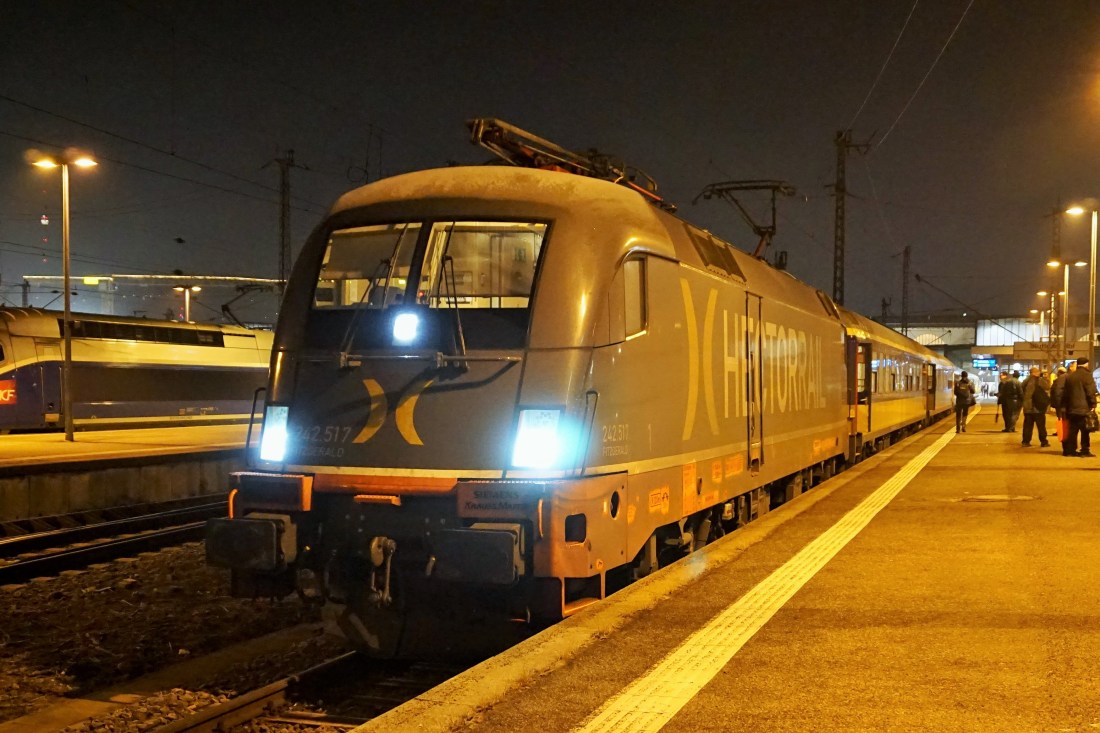
182 517 at Stuttgart Hbf with the Locomore service to Berlin, 11/02/17 (JW)

Today, Thursday 24th August 2017 has seen the recommencement of an interesting loco-hauled service in Germany, which has not run since May.

The instigation of the “Locomore” open-access service from Stuttgart to Berlin and return in December 2016 was especially noteworthy as it was crowdfunded; the first railway operation of this type.

Running via Heidelberg, Darmstadt, Frankfurt-Süd, Kassel, Hannover and Wolfsburg, the operation consists of one out-and-back diagram running Thursdays to Sundays inclusive (LOC1818 06:21 Stuttgart Hbf to Berlin Lichtenberg and LOC1819 14:28 return).

From its introduction on 14th December 2016, the service was notable for being frequently reported as being fantastic from a customer service perspective, but also being quite poorly loaded, although this was improving as the service became better-known.

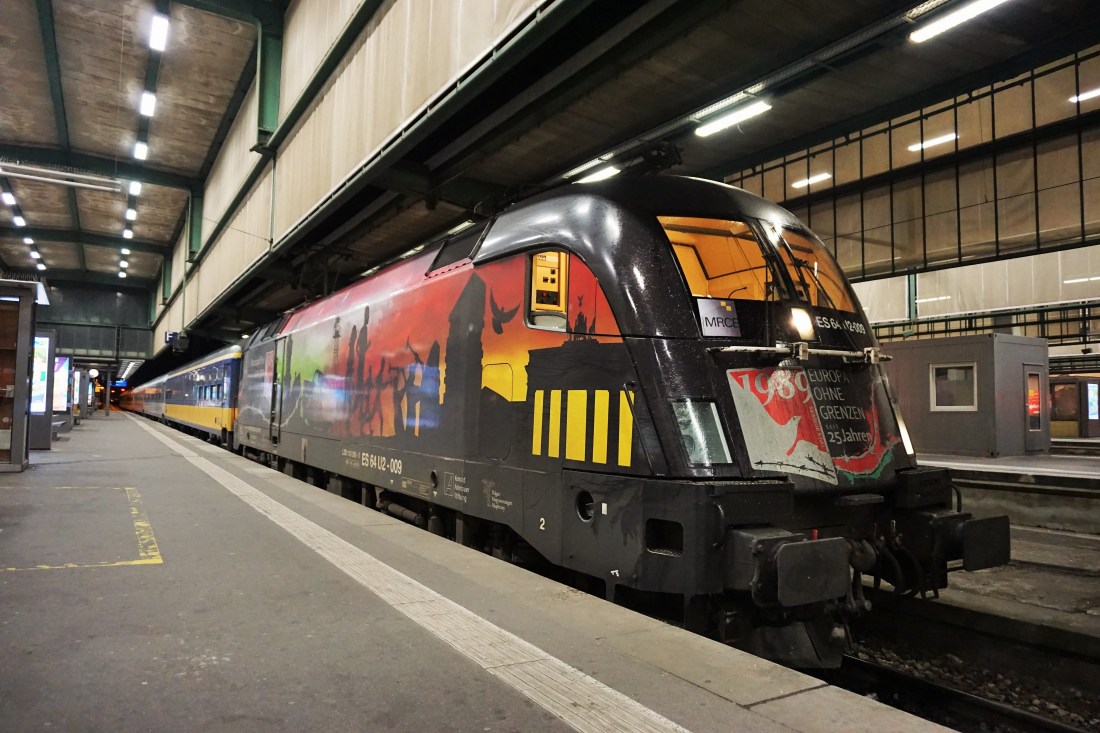
Motive power has always been provided by Class 182 (Siemens “Taurus”) electric locos from Hector Rail (in turn hired by them from MRCE Dispolok).  The locomotives to work the train were (in numerical order): 182 501, 182 509, 182 517 and 182 534.  182 509 is notable as the loco painted in the “Pan-European Picnic” livery; however, both it and 534 have now left the Hector Rail fleet.  Locos would stay with the train sometimes for months on end!

DSC02107 (2)

182 509 sits on the blocks at Stuttgart Hbf, 05/05/17 (JW)

Unfortunately, in May 2017, Locomore GmbH & Co. KG filed for insolvency and the operation ceased, with the locos going back to Hector Rail and the stock heading for store at Neustrelitz works.

Happily, LEO Express (the Czech open-access operator known for running Stadler FLIRT EMUs mainly between Praha and Bohumín) has acquired the operation, and as of today, the service has restarted – using the same paths, locos and carriages.  The loco on LOC1819 from Berlin to Stuttgart today was, again, 182 517!

Hopefully this interesting service now has a stable and successful future ahead of it.

Saturday 26th August 2017: German V75 railtour

Saturday 26th August 2017 sees an unusual railtour operated from the former East Germany into the Czech Republic and return, featuring the sole surviving ex-Deutsche Reichsbahn class 107 diesel loco and a Czech sister machine.

With an urgent need to replace its fleet of 21 inherited class 80 steam locos, and without a proven home-grown diesel design, 1962 saw the East German Deutsche Reichsbahn procure a fleet of 20 type “V75” diesel-electric locos from the Czechoslovakian manufacturer CKD (Ceskomoravska Kolben Danèk).  These were identical to the type T435.0 “Hektor” design which had been successfully supplied by CKD to the Czechoslovakian state railway, ČSD.

These 750hp, six-cylinder Bo-Bos operated primarily in the Leipzig and Halle area, almost exclusively on local freight work.  Under the renumbering scheme of 1970, V75 001 to V75 020 became 107 001 to 107 020.

The 107s were largely ousted by class 106 in the late 1970s and early 1980s, and the majority were then scrapped.  However, two – 107 004 and 107 018 – passed into industrial use at the Karsdorf cement works, giving them a stay of execution that took them through German reunification, and they then passed to the KEG (Karsdorfer Eisenbahngesellschaft) in 1991, who used them on works trains on the main line.

107 004 was cut up in 2011, but 107 018 now belongs to Railsystems RP GmbH and spends most of its time on engineers trains across Germany.

The above is a link to a video uploaded to YouTube by the user LudmillaPOWER featuring scenes of a railtour hauled by 107 018 in 2015.

The railtour

Roughly once a year – usually in late summer – as befits its lack of train heating capability – 107 018 ventures out on railtour duty with the Eisenbahnmuseum Schwarzenberg.

In 2017, this tour is advertised for Saturday 26th August 2017, and sees 107 018 paired with one of its Czech cousins – T435.0145 (ČD 720 145).  Fittingly, this tour runs from East Germany into the Czech Republic.  Initially, the destination was advertised as the beautiful spa town of Mariánské Lázně, but engineering works have necessitated a switch to Chyše.

Times and fares

Tickets are €84 (€50 for children) and are available from the Eisenbahnmuseum Schwarzenberg website.

The tour departs from Schwarzenberg at 07:25 (arrive back 21:20), calling at Antonsthal at 07:40 (21:00) and Johanngeorgenstadt at 08:00 (20:25), running over steeply-graded routes via Karlovy Vary to Chyše, where it arrives at 12:30 and departs at 16:15.

Getting to the tour

Schwarzenberg is a fairly large town, however its location in the Ore Mountains (Erzgebirge) is perhaps not the best to base yourself.  However, it is possible to access this tour from Zwickau, the fourth-biggest city in Saxony (via RB23857, the 06:09 ex-Zwickau which is a +30 onto the tour); equally there is a +40 off the tour onto RB23888, the 22:00 to Zwickau.

Zwickau is no longer on the Intercity network – in fact, it has no booked loco hauled services at all any more – but is easily accessible from Leipzig, Chemnitz and Dresden, as well as across the erstwhile Iron Curtain into Bavaria.

One thing which may be of interest is that by doing this tour in just one direction, it can be combined with the “Rakovnický rychlík” which is also booked to run that day.  You can travel on the outward leg of the tour, followed by Os16711, the 13:08 DMU from Chyše to Rakovnik, which gives a +73 onto the “Rakovnický rychlík” to Praha at 15:32.  Alternatively, the outward “Rakovnický rychlík” can be travelled on from Praha to Rakovnik (arriving 10:30), for a choice of DMUs to Chyše, for the return leg of the railtour.

The destination

Having a population of only 585, Chyše – Chiesch in German – may at first glance be an odd choice of railtour destination.  This town, situated on the river Střela 5 miles north-east of Žlutice, is probably most well known as the location of a Baroque castle, entry to which is included in the price of the tour ticket.  The castle is home to a brewery, which tour participants are also encouraged to visit during the 3¾-hour layover.

Chyše also has a ruined synagogue, a tragic reminder of the events of 1938-1945, when this area was part of the “Sudetenland” ceded to Germany.  Indeed, the 1930 census saw the town with over the twice the number of citizens than it has today.  There is certainly plenty of history in the country through which this tour passes.


If you’re enjoying the content of this website, please could I invite you to have a look at how you could support it?  Thanks!

Sunday 2nd July 2017 – V100 haulage bonanza in south-west Germany

IMGP4504

Once a “part of the furniture” across the former West Germany, the centre-cab diesel-hydraulic locos of the V100 family are now fairly rare to pin down on passenger-carrying workings.

Due to a number of simultaneous steam loco failures, however, three of them are planned to be used on passenger-carrying trains within relatively close proximity in the south-west corner of Germany this coming Sunday, 2nd July 2017.  These last minute substitutions are leading to something of an impromptu “diesel gala” in Baden-Württemberg.

Murgtalbahn

A class 213 (presumed to be 213 340) from the Albtal Verkehrsgesellschaft will haul the following:

09:17 Karlsruhe Hbf – Baiersbronn arr 12:10
14:47 Baiersbronn – Raumünzach arr 15:23
15:35 Raumünzach – Baiersbronn 16:10

16:47 Baiersbronn – Karlsruhe Hbf arr 19:38

This is a monthly endeavour by the Ulmer Eisenbahnfreunde / Dampfnostalgie Karlsruhe, ostensibly booked for 2-10-0 steam loco 58 311, but this is currently out of traffic.  “Krokodil” E94 088 (ex-ÖBB 1020 010) is its replacement, but this too is unavailable this weekend, hence the substitution by the 213.  More information here.

Strohgäubahn

212 309 will haul three round trips from Korntal to Weissach as part of GES Stuttgart’s “Feurige Elias” calendar:

09:16 Korntal – Weissach arr 10:11
10:43 Weissach – Korntal arr 11:38
12:16 Korntal – Weissach arr 13:11
14:43 Weissach – Korntal arr 15:38
16:16 Korntal – Weissach arr 17:11

17:43 Weissach – Korntal arr 18:38

Again, this is due to the unavailability of steam traction.  More details here.

Schwäbischewaldbahn

212 084 of the DBK Historische Bahn will also be substituting for their excellent 2-6-2T 64 419, which is temporarily out of traffic too.

09:30 Schorndorf – Welzheim arr 10:35
11:05 Welzheim – Schorndorf arr 12:04
12:30 Schorndorf – Welzheim arr 13:35
14:35 Welzheim – Schorndorf arr 15:34
16:00 Schorndorf – Welzheim arr 17:05

17:35 Welzheim – Schorndorf arr 18:34

More details here.  To note, reaching Schorndorf from Stuttgart is made more difficult this weekend due to engineering work between the two, necessitating the use of rail replacement buses to bridge the gap.

Example move!

It is possible to ride behind all three V100s during the course of the day.  There is more than one way to do it – all of which involve several buses and multiple units – but probably the most palatable is as follows – in a 12-hour day centred on Stuttgart:-

08:48 Stuttgart Hbf – Korntal arr 09:01 (S-Bahn, route S6)
09:16 Korntal – Weissach arr 10:11 (212 309)
10:17 Weissach – Leondorf arr 10:41 (no.634 bus)
10:47 Leondorf – Stuttgart Hbf arr 11:12 (S-Bahn, route S6)
11:45 Stuttgart Hbf – Waiblingen arr 11:59 (S-Bahn, route S3)
12:07 Waiblingen – Schorndorf arr 12:37 (rail replacement bus)
12:50 Schorndorf – Welzheim arr 13:14 (no.228 bus)
14:35 Welzheim – Schorndorf arr 15:34 (212 084)
15:48 Schorndorf – Endersbach arr 16:02 (S-Bahn, route S2)
16:08 Endersbach – Waiblingen arr 16:24 (rail replacement bus)
16:40 Waiblingen – Stuttgart Hbf arr 16:55 (S-Bahn, route S2)
17:08 Stuttgart Hbf – Karlsruhe Hbf arr 17:51 (IC2366)
18:09 Karlsruhe Hbf – Rastatt arr 18:22 (RE4737)
19:09 Rastatt – Karlsruhe Hbf arr 19:38 (213 340)
20:05 Karlsruhe Hbf – Stuttgart Hbf arr 20:58 (IRE4915)

So, in conclusion, desperate, but – as long as everything runs, and to time – eminently doable!

DB Class 112 and 114: current status

As of 05/07/17, only 75 of the 90 class 112.1 remain in traffic.

Loco Operator Last Reported Passenger Working
112 101 DB Regio – Cottbus 13/05/17: RE4355
112 102 DB Regio – Rostock 02/06/17: Berlin REs
112 103 DB Regio – Rostock 17/05/17: RE13290
112 104 DB Regio – Cottbus 09/06/17: RE10
112 105 DB Regio – Stuttgart 09/06/17: RB39910
112 106 DB Regio – Stuttgart 24/06/17: Stuttgart RBs
112 107 stopped at Dessau Works 26/12/16: RE4358
112 108 DB Regio – Stuttgart 19/06/17: Stuttgart RBs
112 109 DB Regio – Cottbus 19/06/17: Berlin REs
112 110 DB Regio – Cottbus 01/06/17: Berlin REs
112 111 DB Regio – Cottbus 19/06/17: Berlin REs
112 112 DB Regio – Cottbus 03/05/17: RE5
112 113 DB Regio – Cottbus 05/06/17: RE18392
112 114 DB Regio – Cottbus 02/06/17: Berlin REs
112 115 DB Regio – Berlin-Lichtenberg 02/06/17: Berlin REs
112 116 DB Regio – Berlin-Lichtenberg 02/06/17: Berlin REs
112 117 DB Regio – Cottbus 28/05/17: Kirchentag additional to Lutherstadt Wittenberg
112 118 DB Regio – Berlin-Lichtenberg 19/06/17: Berlin REs
112 119 DB Regio – Berlin-Lichtenberg 02/06/17: Berlin REs
112 120 DB Regio – Cottbus 02/06/17: Berlin REs
112 121 DB Regio – Cottbus 23/05/17: RE78903
112 122 DB Regio – Cottbus 02/06/17: Berlin REs
112 123 DB Regio – Cottbus 09/05/17: RE3
112 124 DB Regio – Berlin-Lichtenberg 08/06/17: RE3306
112 125 DB Regio – Kiel 23/06/17: RE7
112 126 stored at Hamm (SSM)
112 127 stored at Hamm (SSM)
112 128 stored at Kiel 15/07/16: RE15
112 129 stored at Cottbus 30/09/16: RE1
112 130 stored at Hamm (SSM)
112 131 stored at Kiel 18/01/17: Hamburg REs
112 132 stored at Cottbus 13/09/16: Berlin REs
112 133 DB Regio – Berlin-Lichtenberg 17/06/17: RE18491
112 134 stored at Stuttgart 13/08/16: RB31
112 135 scrapped 03/09 after a fire at Borgeln on 04/06/08
112 136 stored at Hamm (SSM)
112 137 stored at Hamm (SSM)
112 138 DB Regio – Stuttgart 09/06/17: RB19122
112 139 DB Regio – Stuttgart 19/06/17: Stuttgart RBs
112 140 DB Regio – Kiel 26/04/17: RE21134
112 141 DB Regio – Kiel 30/05/17: Hamburg REs
112 142 DB Regio – Kiel 12/06/17: RE21026
112 143 DB Regio – Kiel 22/06/17: RE21008
112 144 DB Regio – Kiel 21/06/17: RE21083
112 145 DB Regio – Kiel 19/02/17: RE7
112 146 DB Regio – Cottbus 14/03/17: RE3191
112 147 DB Regio – Kiel 18/06/17: RE21418
112 148 DB Regio – Cottbus 27/02/17: RB49
112 149 DB Regio – Kiel 18/06/17: RE21064
112 150 DB Regio – Kiel 21/06/17: RB21306
112 151 DB Regio – Kiel 21/05/17: RE21014
112 152 DB Regio – Cottbus 10/06/17: RB31
112 153 DB Regio – Kiel 22/06/17: RE21010
112 154 DB Regio – Kiel 24/06/17: Schleswig-Holstein RE7
112 155 DB Regio – Cottbus 13/05/17: Warnemünde cruise train
112 156 DB Regio – Kiel 21/06/17: RE21006
112 157 DB Regio – Kiel 07/06/17: RE21865
112 158 stored at Kiel 26/04/17: RE21420
112 159 DB Regio – Kiel 22/06/17: RB21306
112 160 DB Regio – Kiel 22/06/17: RE21004
112 161 DB Regio – Stuttgart Overhaul date of 28/06/17 now back in traffic.
112 162 DB Regio – Kiel 21/06/17: RE21056
112 163 DB Regio – Kiel 18/06/17: RE21318.  Viewed on stock move at Seelze 07/07/17.
112 164 DB Regio – Magdeburg 11/06/16: RB86
112 165 DB Regio – Berlin-Lichtenberg 02/06/17: Berlin REs
112 166 DB Regio – Magdeburg 11/05/17: Magdeburg S1
112 167 DB Regio – Kiel 24/06/17: RE41420
112 168 DB Regio – Kiel 30/05/17: Hamburg REs
112 169 DB Regio – Stuttgart 09/06/17: RB39914
112 170 DB Regio – Stuttgart 08/06/17: RB39914
112 171 DB Regio – Kiel 30/05/17: Hamburg REs
112 172 DB Regio – Kiel 18/06/17: RE21420
112 173 DB Regio – Kiel 30/05/17: Hamburg REs
112 174 DB Regio – Stuttgart 24/06/17: Stuttgart RBs
112 175 stopped at Kiel 17/01/17: Hamburg REs
112 176 DB Regio – Kiel 26/04/17: RE21470
112 177 DB Regio – Kiel 21/06/17: RB21308
112 178 DB Regio – Kiel 21/06/17: RE21008
112 179 DB Regio – Kiel 22/06/17: RE21058
112 180 DB Regio – Kiel 18/06/17: RE21018
112 181 DB Regio – Kiel 26/04/17: RE21422
112 182 DB Regio – Berlin-Lichtenberg 04/09/16: RE5
112 183 DB Regio – Berlin-Lichtenberg 19/06/17: Berlin REs
112 184 DB Regio – Cottbus 03/02/17: RB49
112 185 DB Regio – Berlin-Lichtenberg 21/08/16: RE4364
112 186 DB Regio – Berlin-Lichtenberg 20/01/17: RE3309
112 187 DB Regio – Rostock 12/05/17: RE13290
112 188 DB Regio – Cottbus 03/05/17: RE13290
112 189 DB Regio – Berlin-Lichtenberg 19/06/17: Berlin RB14
112 190 DB Regio – Berlin-Lichtenberg 15/04/17: RE4362

Only 31 of the 39 class 114s remain in traffic:-

Loco Operator Last Reported Passenger Working
114 002 DB Regio – Stuttgart 31/03/17: Stuttgart RBs
114 003 stored at Cottbus
114 004 DB Regio – Stuttgart 19/06/17: Stuttgart RBs
114 005 DB Regio – Rostock 26/04/17: Warnemünde cruise train.  Re-entered traffic from Dessau Works circa 04/07/17
114 006 DB Regio – Stuttgart 24/06/17: Stuttgart RBs
114 007 DB Regio – Frankfurt (Main) 31/05/17: RE4542
114 008 DB Regio – Frankfurt (Main) 10/02/17: RB15618
114 009I scrapped 07/13 after a fire at Berlin Lichtenberg on 26/07/11
114 009II DB Regio – Frankfurt (Main) – former 143 873 01/06/17: Frankfurt RBs
114 010 DB Regio – Frankfurt (Main) 31/05/17: RE4540
114 011 DB Regio – Frankfurt (Main) 24/05/17: Frankfurt RBs
114 012 DB Regio – Frankfurt (Main) 31/05/17: RE4525
114 013 DB Regio – Frankfurt (Main) 31/05/17: RB15623
114 014 DB Regio – Frankfurt (Main) 26/02/17: RE50
114 015 DB Regio – Stuttgart 19/06/17: Stuttgart RBs
114 016 stopped at Frankfurt (Main) 08/02/17: Frankfurt RBs
114 017 DB Regio – Stuttgart 24/06/17: Stuttgart RBs
114 018 DB Regio – Frankfurt (Main) 19/07/16: RE30
114 019 scrapped 06/10 after a collision at Berlin-Karow on 16/04/09
114 020 DB Regio – Frankfurt (Main) 31/05/17: RB15662
114 021 stopped at Frankfurt (Main) 20/03/16: Frankfurt RBs
114 022 DB Regio – Frankfurt (Main) 31/05/17: RE4522
114 023 DB Regio – Frankfurt (Main) 31/05/17: RE4523
114 024 DB Regio – Stuttgart 08/06/17: RE19962
755 025 Departmental loco since mid-1992.  Now stored at München-Freimann – as 114 501
114 026 stored at Hamm (SSM)
114 027 DB Regio – Frankfurt (Main) 19/04/17: RB39906
114 028 DB Regio – Stuttgart 24/06/17: Stuttgart RBs
114 029 DB Regio – Frankfurt (Main) 31/05/17: RE4524
114 030 DB Regio – Frankfurt (Main) 31/05/17: RB15661
114 031 DB Regio – Frankfurt (Main) 28/05/17: RE28541 (Kirchentag vice in  Dresden area)
114 032 DB Regio – Stuttgart 05/06/17: RE22017
114 033 DB Regio – Frankfurt (Main) 15/02/17: RE4163
114 034 DB Regio – Frankfurt (Main) 31/05/17: RB15656
114 035 DB Regio – Stuttgart 19/06/17: Stuttgart RBs
114 036 DB Regio – Frankfurt (Main) 31/05/17: RE4520
114 037 DB Regio – Frankfurt (Main) 05/05/17: Frankfurt RBs
114 038 stopped at Frankfurt (Main) 15/09/16: RE4540
114 039 DB Regio – Stuttgart 05/06/17: RE4930
114 040 DB Regio – Rostock 28/05/17: Kirchentag additional to Lutherstadt Wittenberg
114 101 stored at Magdeburg – reverted to 143 171
114 301 DB Regio – Dresden – reverted to 143 120 Class 143


24th & 25th June 2017: DB class 218 haulage into France

IMGP0092

218 484 at Hüffenhardt, 27/06/15 (JW)

A special event will be held over the weekend of 24th and 25th June 2017 to celebrate the “Grenzüberschreitendes Bahnjubiläum Winden – Wissembourg”; the 20th anniversary of the reopening of the cross-border route between Winden, in the German Land of Rheinland-Pfalz, and Wissembourg, in France.

This route, closed in 1975 and reopened in March 1997, has been “off the radar” for locomotive fans since occasional class 218 diesel-hydraulic haulage ceased on summer Saturday specials in 2013; this was also the last time that we saw booked class 218 operation into France.

A two-train shuttle will be operated between Winden and Wissembourg – one formed of a modern SNCF class X73500 DMU, and the other top and tailed by CFL 2-10-0 steam locomotive 5519 and a 218.  The 218 is presumed to be either 218 483 or 218 484 from DB Regio at Karlsruhe (which have not had any passenger diagrams for a good number of years, and only make sporadic short-notice forays onto passenger work these days).  5519 should lead into Wissembourg, with the 218 leading back out.

7761133098_4e3a4f366e_o.jpg

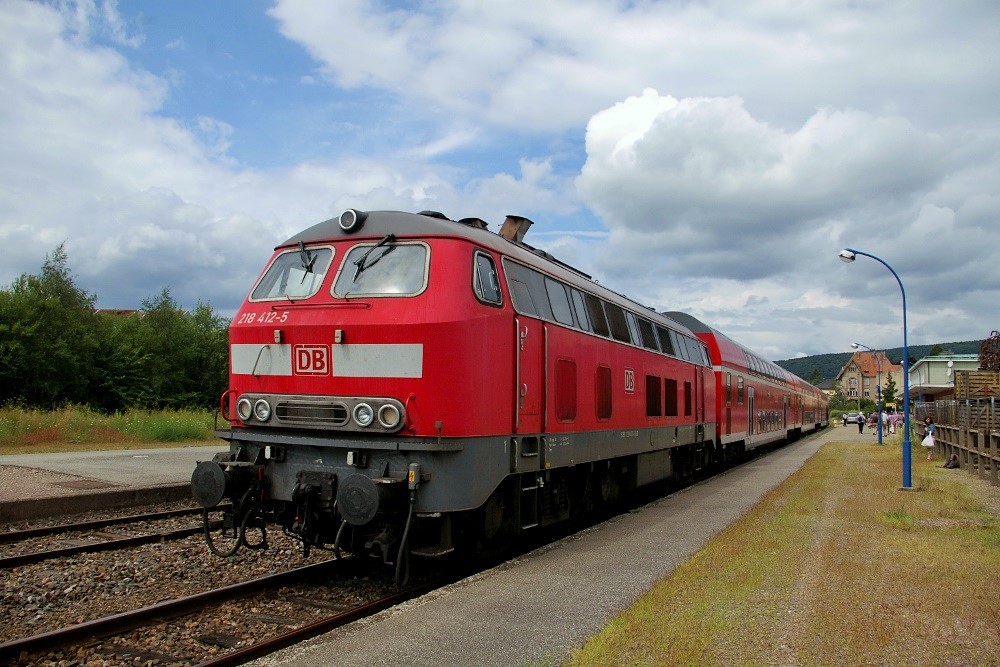
218 412 awaits departure from Wissembourg, 05/08/12 (JW)

The diagram for the “hauled” set each day is as follows:-

07:30 Neustadt Hbf – Wissembourg
10:25 Wissembourg – Winden
11:15 Winden – Wissembourg
13:25 Wissembourg – Winden
14:15 Winden – Wissembourg
16:25 Wissembourg – Winden
17:15 Winden – Wissembourg
19:25 Wissembourg – Neustadt Hbf

Service train tickets are valid for travel on all of these.

More information in a German-language online leaflet here and in French here.

Many thanks to Jonas Briest for his help with this article!